I Watched My Mother Lose Her Reading. Then Her Driving. Then Her Independence. At 64, I Finally Stopped Ignoring My Own Eyes.
I can't change my genes or my mother's story. But for years I let fear stop me from doing anything at all. Here's what I do now for the eyes I've got, starting with the appointment I'd been putting off.
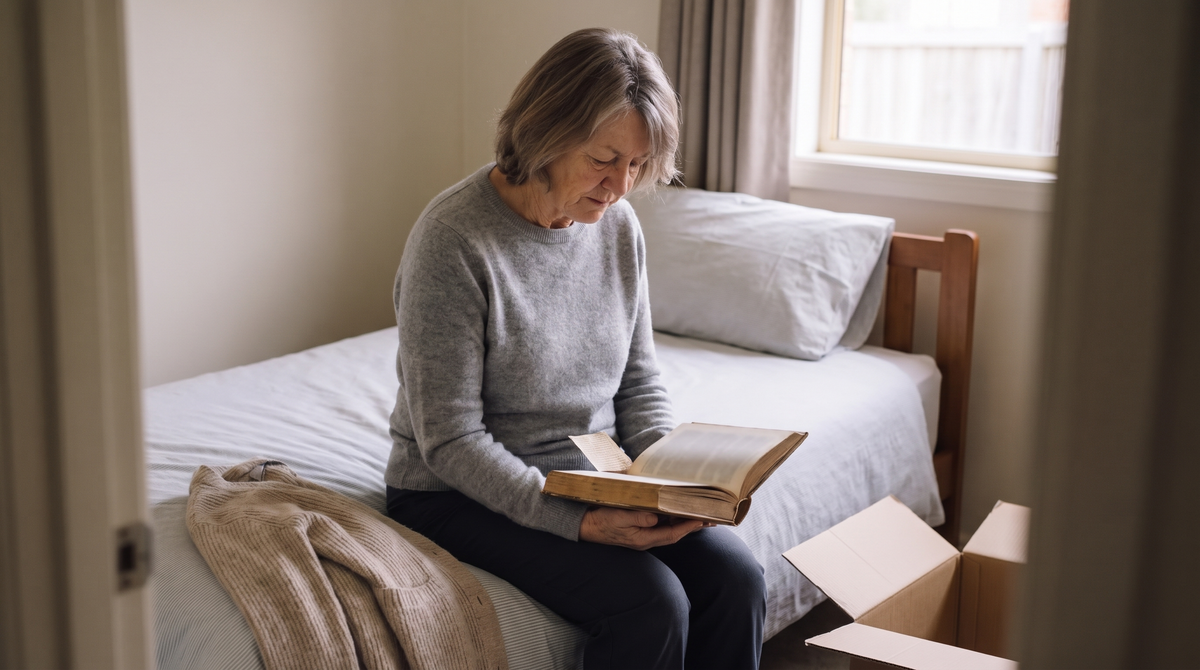
I watched my mother lose her reading. Then her driving. Then her independence.
It took about ten years. It happened so slowly that, most days, you couldn't see it moving. And then one day you look up and the woman who taught you to read is asking you to read her the mail.
If you've watched a parent go through something like that, you already know what I mean. You don't forget it. You carry it around with you, quietly, like a stone in your coat pocket.
This is about what I finally did with mine.
My mother, the reader
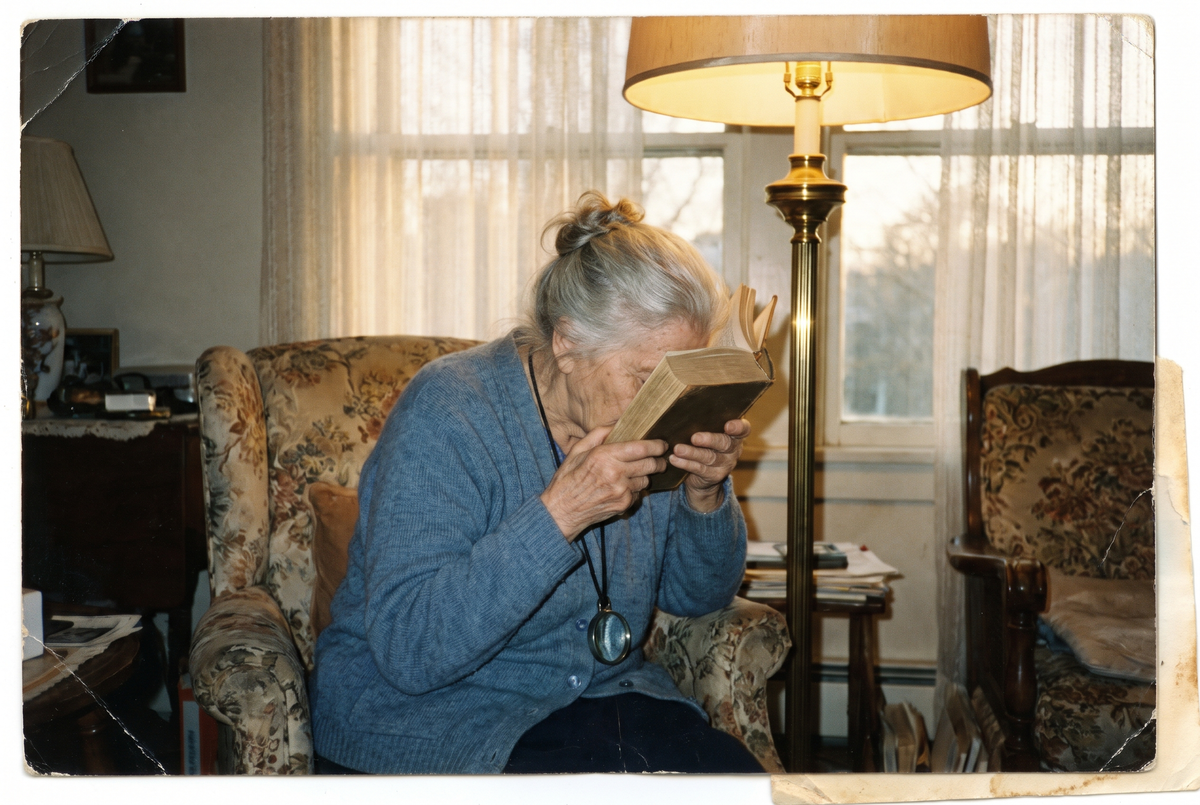
My mother's name was Dorothy. Silver hair, always in a bun. A cardigan on, even in July. A library card she used more than her checkbook.
She read everything. Mysteries, cookbooks, the back of the cereal box. Every Saturday morning for forty years she drove her Oldsmobile to the branch library on Main Street and came home with a stack of six.
The first change was so small none of us really noticed it. The books got bigger. She switched to the large-print shelf and made a joke about it. "Fewer words per page. I finish faster."
Then came the magnifying glass on a cord around her neck. Then the lamp she dragged closer to her chair every few months, until it was practically sitting in her lap.
Then, one winter, the books stopped coming home at all.
Then the car keys
The driving went next.
She never had an accident. I want to say that, because she'd want me to. She just started making excuses. Too much rain. Too dark by four. "I'll go Saturday instead." Then Saturday became "next week."
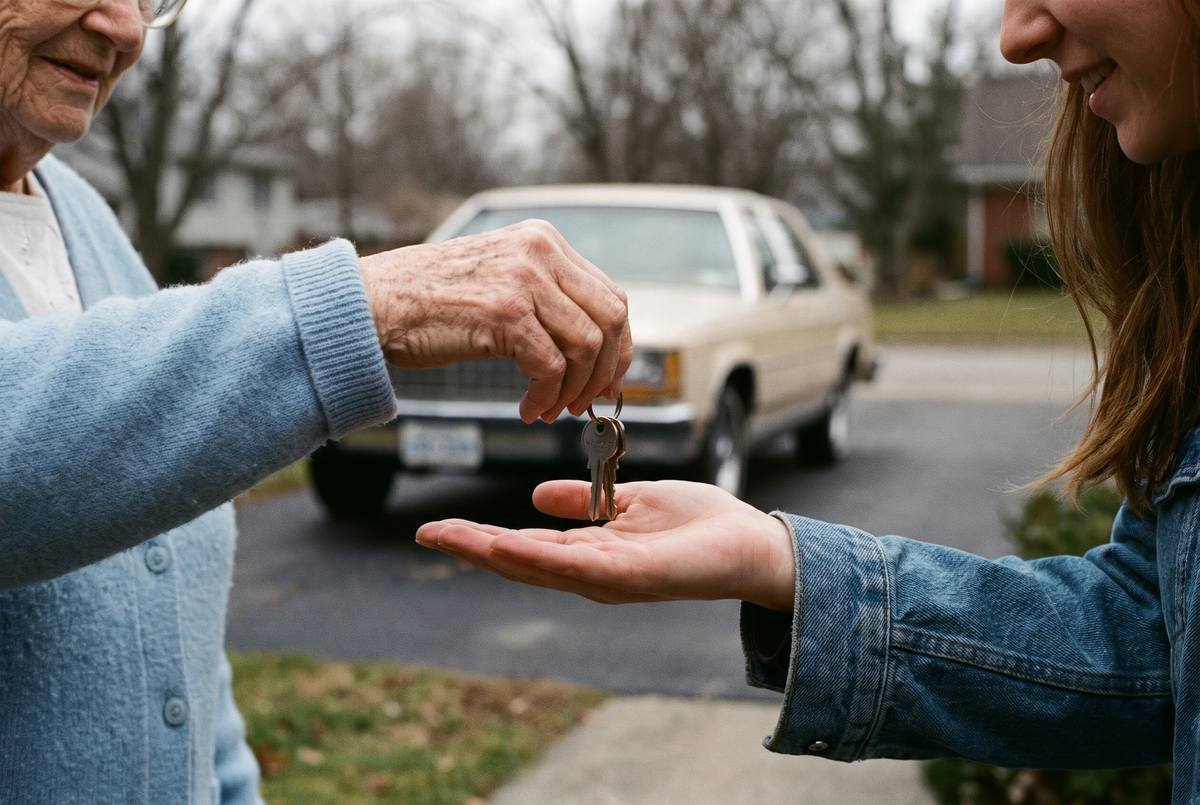
One afternoon in my driveway she held out the keys to the Oldsmobile and said, "You take these, Susie. Before somebody has to take them from me."
I took them. I didn't know what to say. I still don't.
I drove her to the grocery store every Tuesday after that, and to church, and to the hair appointment she never once missed. She thanked me every single time. I hated how often she thanked me.
Then her own front door
The last thing she lost was living on her own.
She was proud, my mother. She'd lived in the same little house for 51 years. But the bills piled up because she couldn't read them. She put a pot on the stove and couldn't make out the dial. One evening she called me because she couldn't find the right button on the new phone.
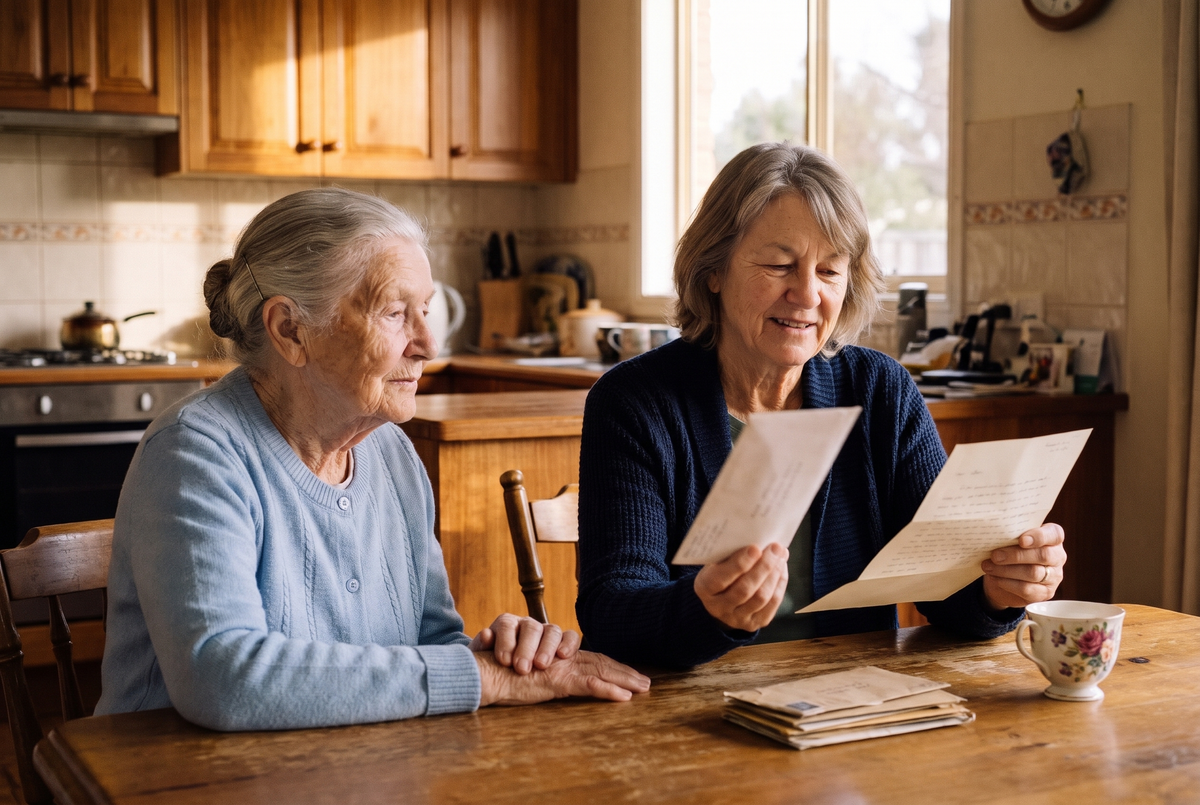
So she moved into our spare room. I read her the mail at the kitchen table every afternoon. Bank statements. Church bulletins. Birthday cards from her sister, who wrote in that tiny, careful hand.
She'd sit there in her cardigan with her hands folded and listen, and I could see what it cost her.
She once said to me, very quietly:
"I used to be the one who read to you."
That one is the stone in my pocket.
The part I never told anyone
Mom passed four years ago. She was 87.
And here's the thing I never said out loud, not to my husband Ron, not to my daughter Karen.
I was terrified it was coming for me next.
Every time I squinted at a menu, I thought of her. Every time I needed more light, I thought of that lamp creeping toward her chair. I'm 64. I'm retired. I have two grandkids, Ava and Ben, who think I hung the moon. I have plans.
And I'd decided, somewhere along the way, that it was in my genes. Like my mother's hands and her laugh. If it was coming, it was coming, and there was nothing to be done about it.
So I did nothing.
Everything I did instead
Looking back, I did a lot of things. None of them were about my eyes.
I didn't go to the eye doctor. Not for almost four years. I told myself I was busy. The truth is I was afraid of what I'd hear in that chair.
I bought readers off the drugstore rack. Three pairs, getting stronger each time. One for the kitchen, one for the car, one for my purse.
I searched online at midnight. Never a good idea. I'd read until I'd scared myself, close the laptop, and lie there awake.
I just didn't think about it. That was the main plan. If you don't look at the stone, you can pretend it isn't in your pocket.
None of that was looking after my eyes. It was looking away from them.
"You hold a book just like Grandma did"
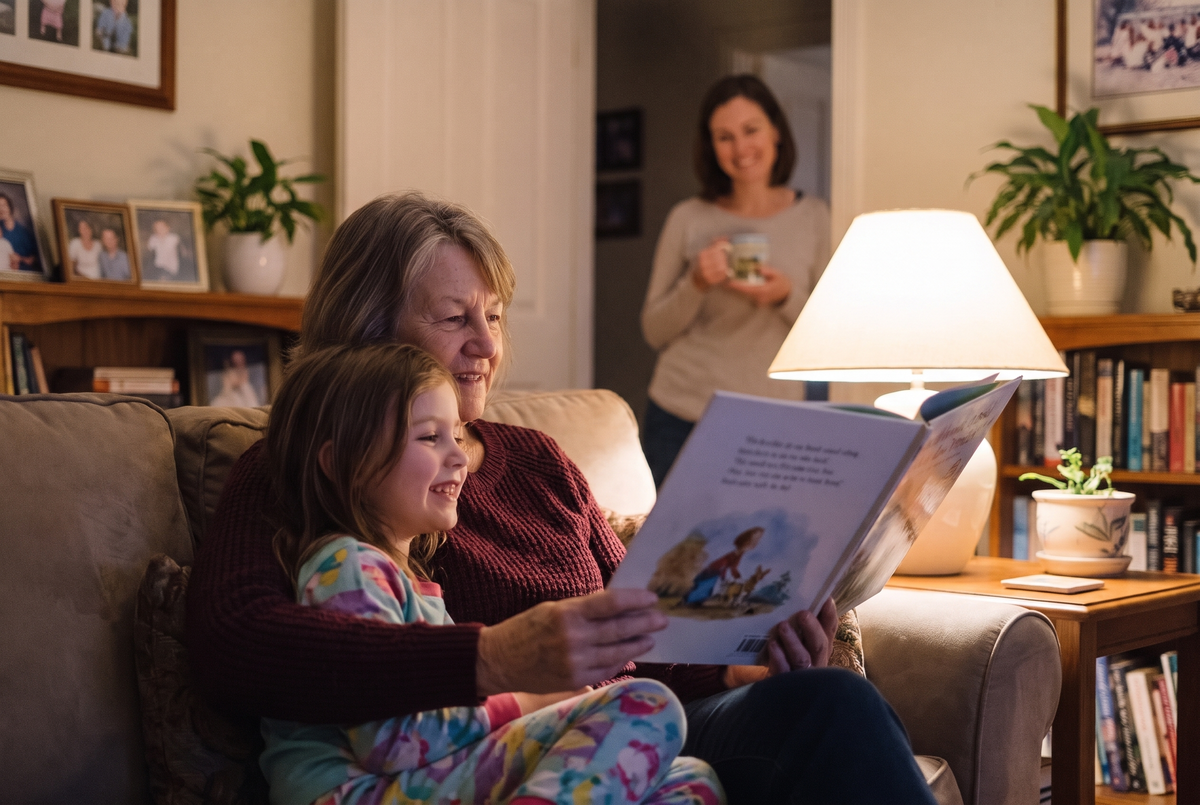
Last spring, Ava was sleeping over. She's seven. She brought me a picture book and climbed into my lap, and I held it out at arm's length and tipped it toward the lamp so I could read the words.
Karen was standing in the doorway with a cup of tea. She smiled and said, "Mom, you hold a book exactly like Grandma did."
She meant it kindly. She didn't know.
I finished the story. I did all the voices. And after Ava fell asleep I sat in the kitchen for a long time with the light off.
The bookmark
A few weeks later I finally cleaned out the last box from Mom's room.
At the bottom was a large-print mystery from the library sale. There was a paper bookmark in it, about two-thirds of the way through.
She never finished it. She'd stopped somewhere in the middle, and she never told me.
I sat on the edge of that bed holding her book, and something in me shifted.
I couldn't change my genes. I couldn't change my mother's story. Nobody can, and I'm not going to pretend otherwise to you.
But I'd spent four years doing nothing at all, out of fear. And whatever is or isn't written in my genes, there were things I could control. I'd just never done them.
I can't change my genes or my mother's story. I can stop ignoring my own eyes.
I said it out loud, to an empty room, and then I went downstairs and called the eye doctor.
Step one was not a bottle
I want to be clear about the order I did things in, because it matters.
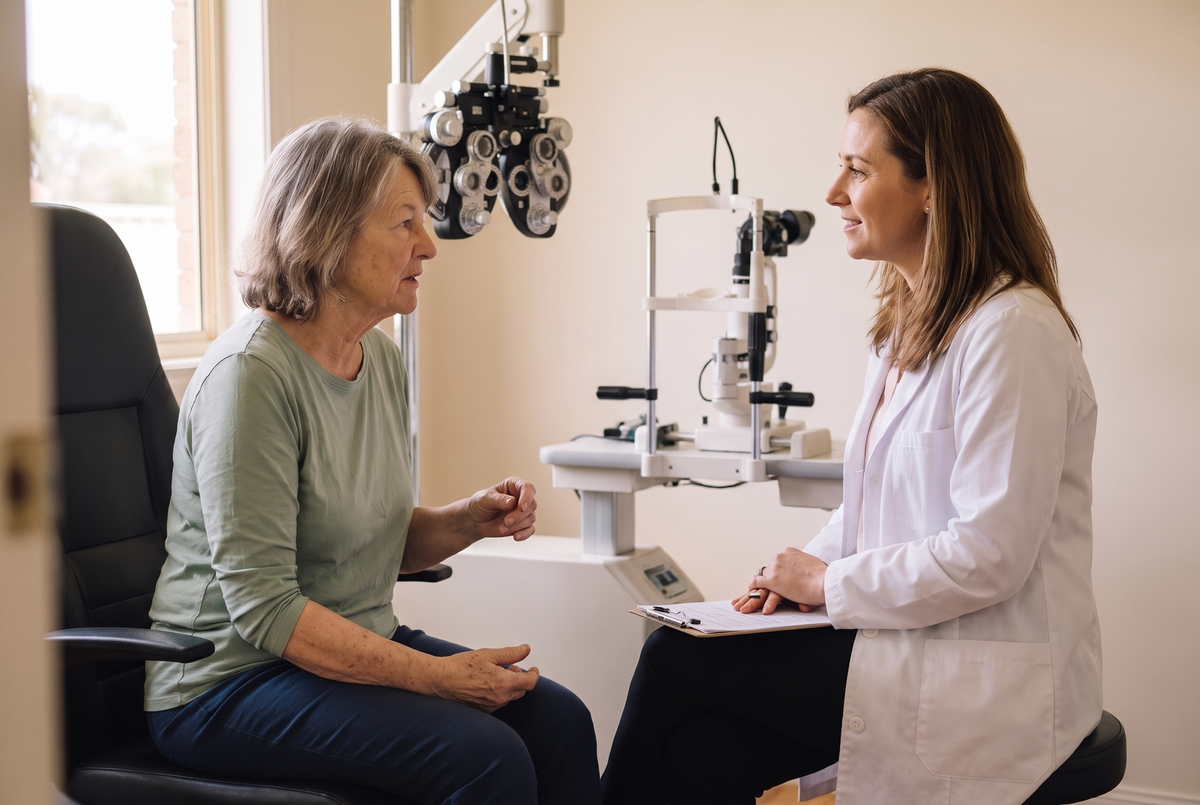
The first thing I did was the thing I'd been avoiding for four years. I sat in the eye doctor's chair.
I almost didn't mention Mom. It felt like admitting something.
I'm glad I did. My doctor put her pen down and said, "That's exactly the kind of thing I need to know." She asked questions I'd never thought to ask myself. How old was Mom when it started? What did her doctors call it? Did anyone else in the family have trouble?
Then she checked everything, slowly and carefully.
My eyes looked healthy for my age. I sat there in that big chair and cried anyway, four years of it at once. She handed me a tissue like she'd done it a thousand times. She probably has.
She also told me three things I'll pass on to you.
My drugstore readers were the wrong strength. She wrote me a real prescription.
With my family history, she wants to see me every year, not "when I get around to it." It's on the calendar now, in pen.
And if I ever notice a change, I'm not to wait for the next appointment. I'm to call.
What I couldn't control, and what I could
On the drive home I made two lists in my head.
The first list was short. My genes. My age. My mother's story. I can't change a single thing on it, and I've made my peace with that.
The second list was longer than I expected. Things that were mine to do, and that I'd simply never done:
Your eyes can't make lutein
I went home and read about it properly. Not on websites trying to scare me at midnight. In the medical journals, the way my daughter showed me.
Here's what I found.
At the center of the back of your eye there's a small yellow pigment. It's made from two plant nutrients called lutein and zeaxanthin.
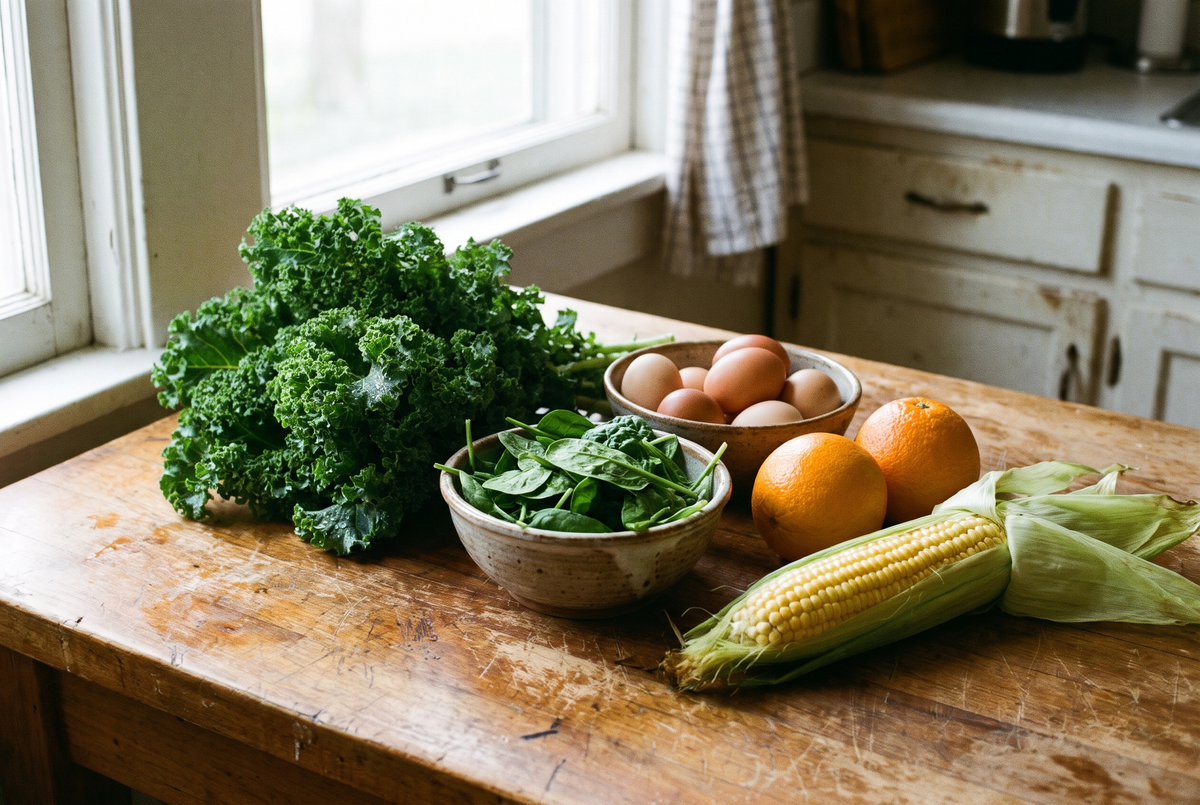
Your body cannot make either of them. Not a speck. They only arrive through what you eat, mostly dark leafy greens like kale and spinach, plus egg yolks and corn. Your eye can't manufacture them. It can only collect what you give it.
I don't eat kale every day. If I'm honest, I don't eat kale any day.
So I had to ask myself a fair question. If my eyes can't make lutein, where was mine supposed to be coming from?
That wasn't the only thing.
The clear fluid at the front of your eye carries vitamin C at 20 to 70 times the level in your blood. Your body goes to real trouble to gather it there.
And eye tissue holds some of the highest zinc levels anywhere in the body, most of it in the layers at the very back.
None of this is a secret. It's in the research. Nobody had ever told me, that's all. In all the years I spent worrying about my eyes, I'd never once thought about what they actually use.
My neighbor Frank
Frank lives two doors down. He's 81, and he still drives himself to church every Sunday in a very clean Buick.
I asked him once how he does it. He laughed and said, "I've been going to the eye doctor every year since Nixon."
I don't know if that's why. Nobody can know that, and I'm not going to tell you a habit guarantees anything. Plenty of people do everything right and still have trouble.
But I noticed something. The people I know who are still driving at 80 didn't start thinking about their eyes at 79.
I was 64, and I'd barely started.
The daily habit I added
I started eating more greens. Spinach in the eggs, a salad most days. Ron grumbles. He eats it.
But I'm a realist. I'm 64, I cook for two, and some nights supper is soup and crackers. My plate is good. It is not perfect every day.
So I wanted one more small, boring habit. Not a miracle. A short list of the nutrients I'd just read about, taken every morning, from people who'd let me send it back.
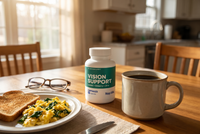
My daughter Karen is the one who reads every label in the store. She's the one who found Stay Able Vision Support.
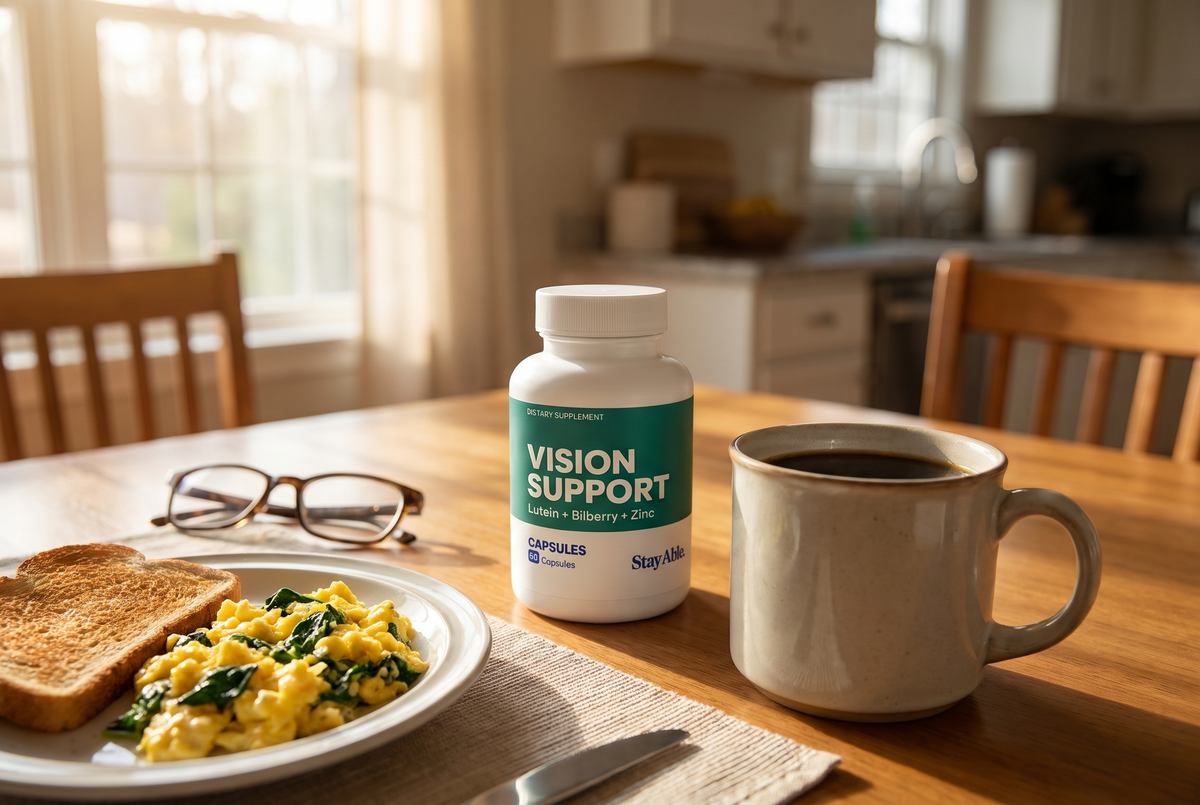
What I liked first was how plain it is. No big promises on the label. Just what's in it:
Two capsules a day with breakfast. Lutein and bilberry, every morning, alongside my coffee and my toast. It supports healthy eyes as part of a daily routine.
That's the whole promise. After everything I watched my mother go through, I'd be suspicious of anything bigger.
What it is NOT (please read this part)
I've watched people sell hope to families like mine. So I'm going to be as straight with you as I'd want someone to be with me.
If you're looking for a guarantee about the future, I don't have one for you. Nobody honestly does.
If you're looking for one more thing you can do, every day, for the eyes you've got, keep reading.
What I do now
The old me did nothing and worried. The new me has a list. Most of it is free.
1. An eye exam every year, with my family history in the file. On the calendar, in pen.
2. Call, don't wait. If anything changes, I phone the office. I don't save it for the next visit.
3. Sunglasses and a hat in the garden and in the car on bright days.
4. Greens most days. Spinach in the eggs, a salad at lunch. Kale when I can stand it.
5. Good light for reading, over my shoulder, not in front of my face.
6. Two capsules with breakfast. Lutein and bilberry, every morning.
7. The family history, written down. I gave Karen a card with Grandma Dorothy's story on it, so she can tell her own eye doctor one day.
How it's going
I'm not going to tell you a capsule changed my eyesight. It didn't, and it never claimed to.
The new glasses are what made reading comfortable again. The exam is what let me sleep at night.
What changed most is me. For four years I carried my mother's story around like a sentence I was waiting to serve. Now I carry it like a reason. I'm on my own side.
Last Sunday I finally finished Mom's book. The large-print mystery, the one with the bookmark two-thirds of the way through.
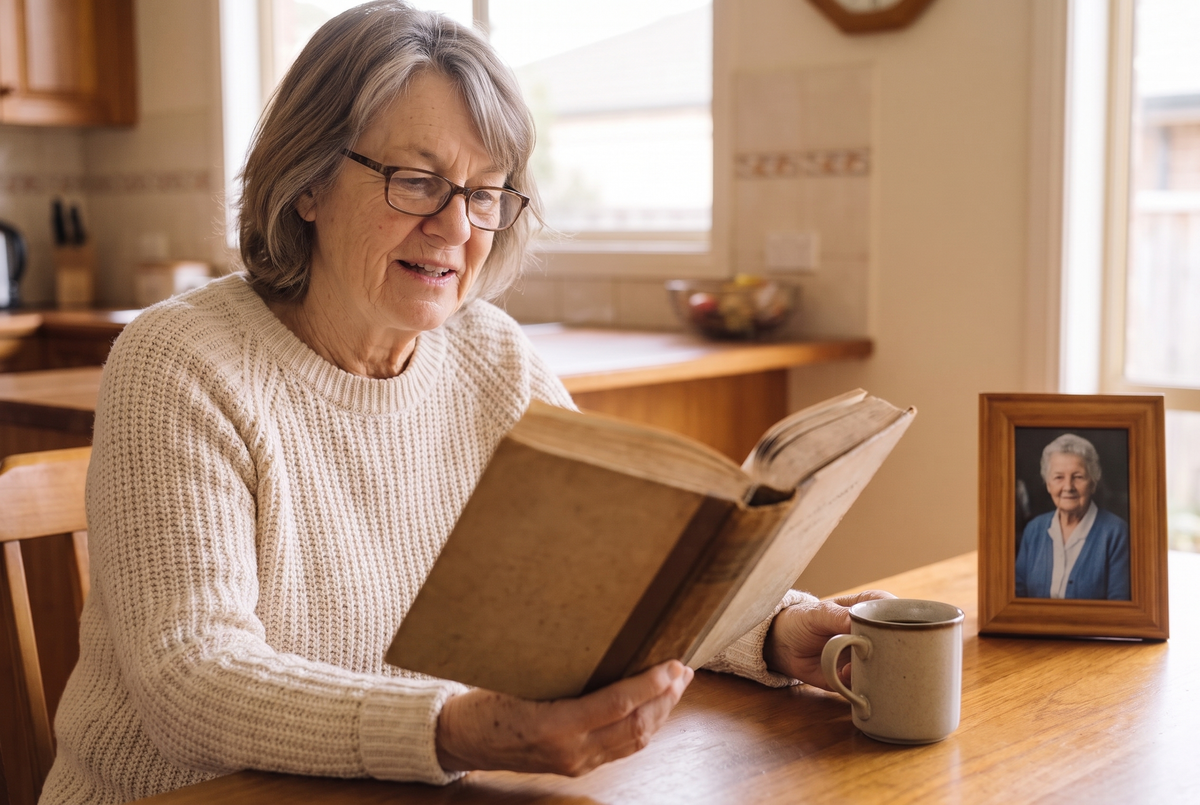
I read the last chapters at the kitchen table, in my new glasses, with my coffee. The last chapter I read out loud, for both of us.
The butler didn't do it. She'd have liked that.
Who this is for
It's not for anyone hoping a pill will rewrite their family history. That doesn't exist, and you deserve better than people who pretend it does.
You might be wondering
Can this stop what happened to my mother from happening to me?
No. No supplement can honestly promise that, and this one doesn't. It supplies nutrients your eyes use every day. The most important thing you can do is see your eye doctor, tell them your family history, and keep going every year.
Isn't it all genetic anyway?
Your genes are yours, and nothing in a bottle changes them. But your exams, your habits and what's on your plate are yours too. Those are the parts I decided to stop ignoring.
Will I notice a difference?
Probably not, and I'd be wary of anyone who says you will. It's daily support for healthy eyes, not a switch you flip.
I already take a multivitamin. Is it okay for me?
Show both labels to your pharmacist or doctor before you start. Ask especially about zinc, so you don't double up. If you take any prescription medicine, ask about that too.
Can't I just eat more greens?
Please do. Kale, spinach, eggs, corn, colorful vegetables, all of it. This is a simple daily backup for those of us whose plate isn't perfect every day.
What if it's not for me?
It comes with a 100-day money-back guarantee. If it's not for you, email us within 100 days and we'll refund you.
What it costs
Stay Able Vision Support is $37.99 for a one-month bottle. If you'd rather not run out, Subscribe & Save brings it to $29.99 a month (that's the subscription price; skip or cancel anytime). A 3-month supply is $99.99, and 6 months is $179.99.
Every option comes with a 100-day money-back guarantee. If it's not for you, email us within 100 days and we'll refund you. That's the reason I tried it.
Two choices
Choice one. Keep telling yourself it's in your genes. Keep putting off the exam. Buy another pair of readers off the rack, and keep carrying that stone around without looking at it.
Choice two. Book the exam this week and tell the doctor what you saw happen. Put sunglasses by the door and greens on the plate. And start one small daily habit for the eyes you've got, every morning, with breakfast.
I can't promise you a different ending than your mother or father had. Nobody can. But I can promise you'll feel different about the years in between, once you stop looking away.
I've seen how this ends for some people. I'd rather spend my years doing what I can than waiting.
P.S. If you only do one thing after reading this, make it the eye exam, and tell them about your mom or dad. Do that before you buy anything, from anybody, including us.
P.P.S. Tonight, write down what you remember about your parent's eyesight: roughly when it started, and what changed first. Give a copy to your kids. It's the one part of the family story you can hand down on purpose.
Sources: lutein and zeaxanthin come only from diet, Linus Pauling Institute; vitamin C concentration in the eye, Nutrients 2020; ocular zinc, Progress in Retinal and Eye Research review.
These statements have not been evaluated by the Food and Drug Administration. This product is not intended to diagnose, treat, cure, or prevent any disease. Individual experiences vary. Dramatization: Susan Miller is a composite character, and her story, including her mother's, is a dramatization.