"Since When Did Every Car on the Road Get Stadium Lights?" I Asked That for Four Years. The Answer Was the Headlights, and It Was Also My Eyes at 66.
If you've been dazzled on a dark road and told no one, read this. The headlights really did change. So did the lens in my own eyes, and nobody had told me that part. I can't fix either one. Here's what I do about the part that's mine.
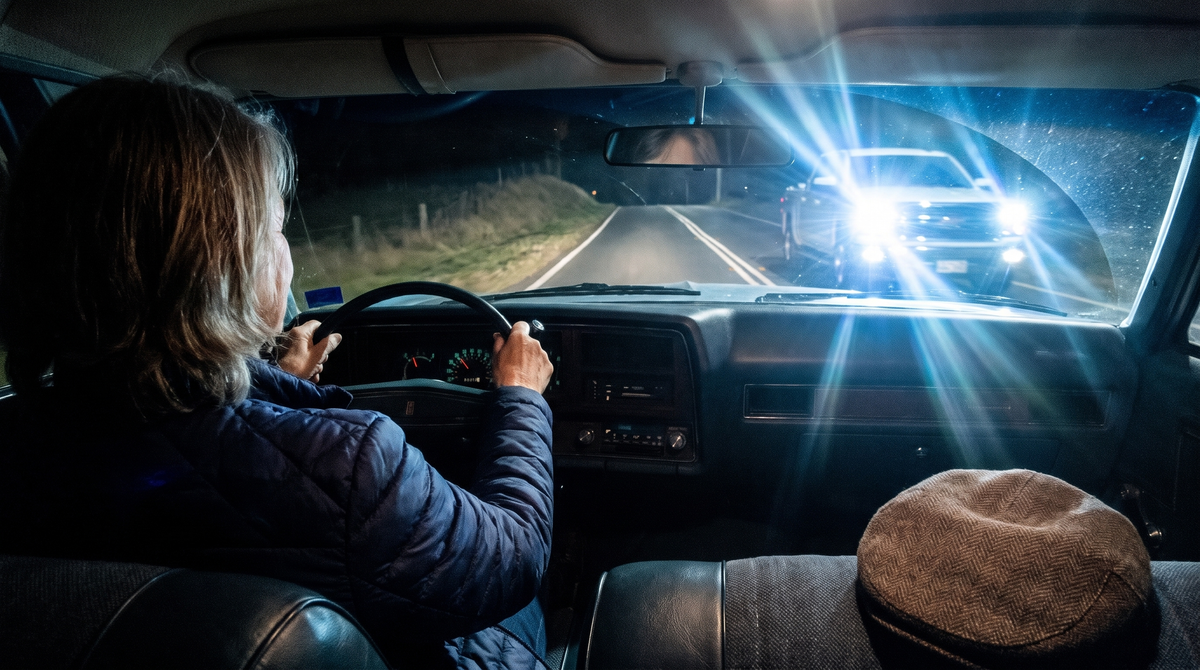
Since when did every car on the road get stadium lights?
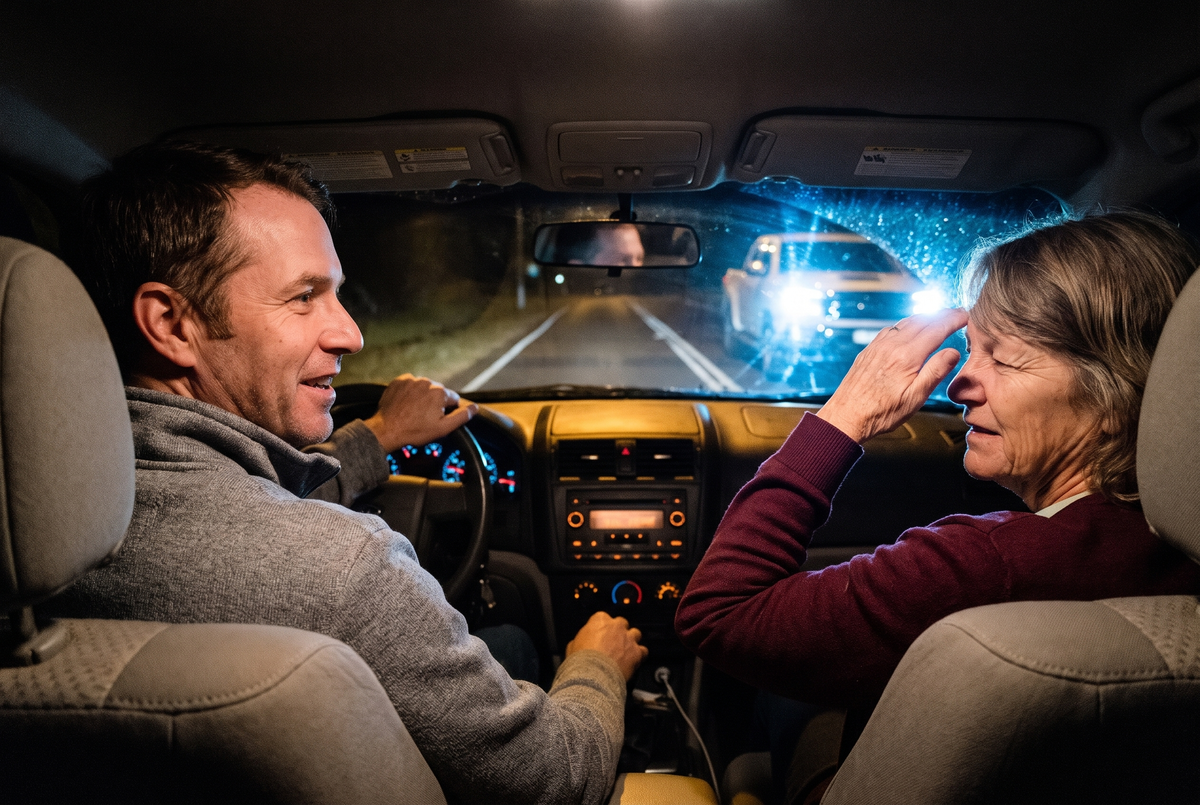
I said it out loud, alone, on Route 9, on a Tuesday in November. A pickup came over the top of the hill and the whole windshield went white. Not bright. White. Like somebody had switched on the lights at a football field and pointed them at my face.
I held the wheel straight and counted. One. Two. Three. When the road came back, it was where I'd left it. That time.
Frank was asleep in the passenger seat. He'd had physical therapy. He never knew.
The drive I can't skip
Every Tuesday and Thursday at 6:15, my husband Frank has physical therapy for his knee. It was the only slot they had.
Twenty-two minutes each way, most of it on Route 9. Two lanes, no shoulder, and a hill about halfway where the trucks come over the top at you.
I do the driving. I've done the driving in this marriage for 40 years, because Frank never liked it, and since his surgery it isn't a choice anymore. If I don't take him, he doesn't go.
So twice a week, October through March, I drive that road in the dark. And twice a week, somewhere around that hill, the stadium lights come on.
What I told my family instead
I never said a word. Not to Frank. Not to our daughter. Not to anybody. For four years.
What I did was get quiet, and get clever.
I'd pull into the gas station before the hill to "check something." I'd take the long way home on the four-lane, fifteen extra minutes, and tell Frank it was a smoother ride for his knee.
I said no to the Hendersons' Friday dinners, which start at seven. I said no to the Altar Society fish fry. When our daughter asked why we'd switched to the 5:30 service at church, I said I liked the music better.
Every one of those was a small lie. Put together, they were one big one.
Here's why. I ran an alterations shop for 31 years. My eyes were my living. I could match a hem to a sixteenth of an inch without my glasses until I was fifty. And a woman who has been the driver for forty years doesn't announce that the headlights are getting to her.
Because I knew the conversation that comes next. Mom, maybe it's time we talked about the car.
If you're reading this, I'd guess you have your own version. A reason you leave early. A road you don't take anymore. A thing you tell your husband or your kids that isn't quite the real thing.
Isn't this just my glasses?
That's what I thought first. So I fixed the glasses. Then I bought things.
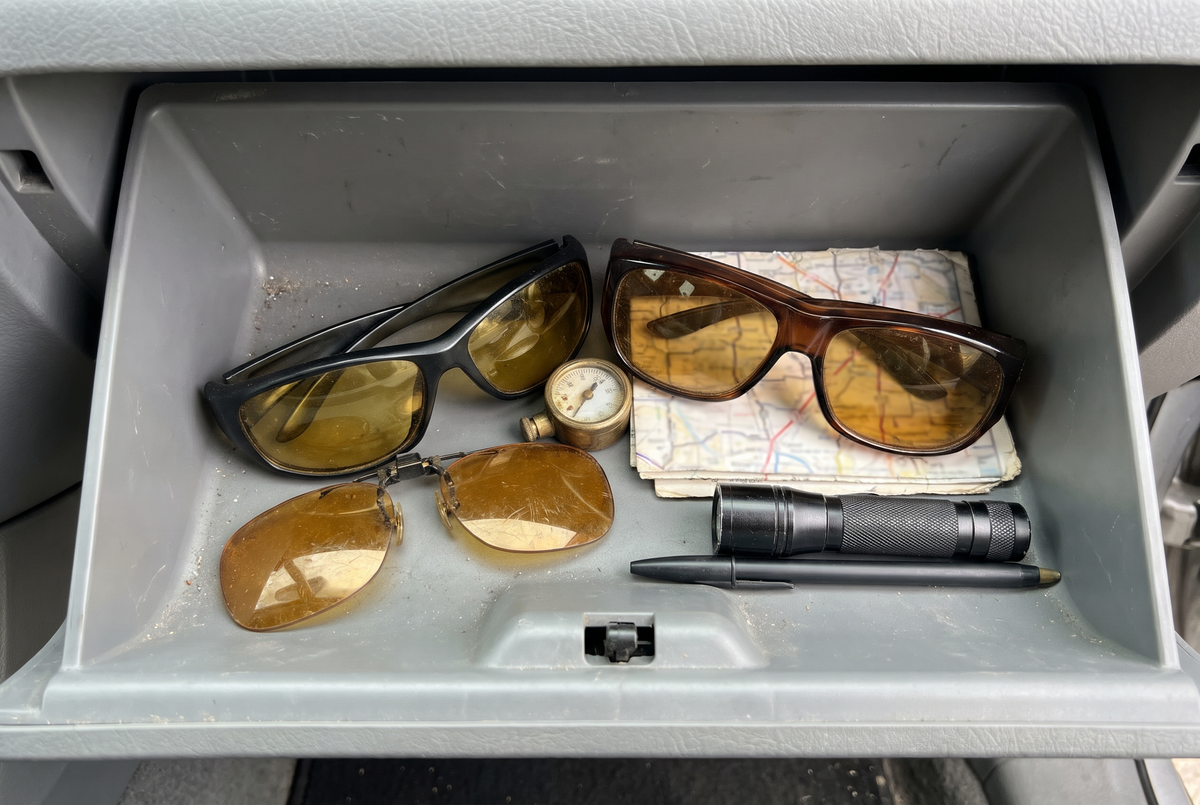
The yellow glasses. Two pairs, one from the drugstore, one from the TV ad. The stadium lights turned yellow. I was still blinded. Now I was blinded in yellow. (I found out later the American Academy of Ophthalmology reported on a study where yellow night-driving lenses made no difference in a driving test.)
Clip-ons over my regular glasses. Polarized, it said. The oncoming lights were the same, and the dark parts of the road got darker. I took them off halfway home.
The anti-glare coating on my new lenses. My eye doctor recommended it, and I'm glad I have it. It cut the reflections off the inside of the windshield. It did nothing about a pickup coming over the hill.
The free things. Dash lights down. Windshield cleaned. Forty on the hill. Eyes on the white line when a car comes, which a trucker taught me years ago.
And the thing most of us end up with, which is just not going.
About $90 in glasses. Four years of excuses. And a drive I still had to make twice a week.
The link my son-in-law sent
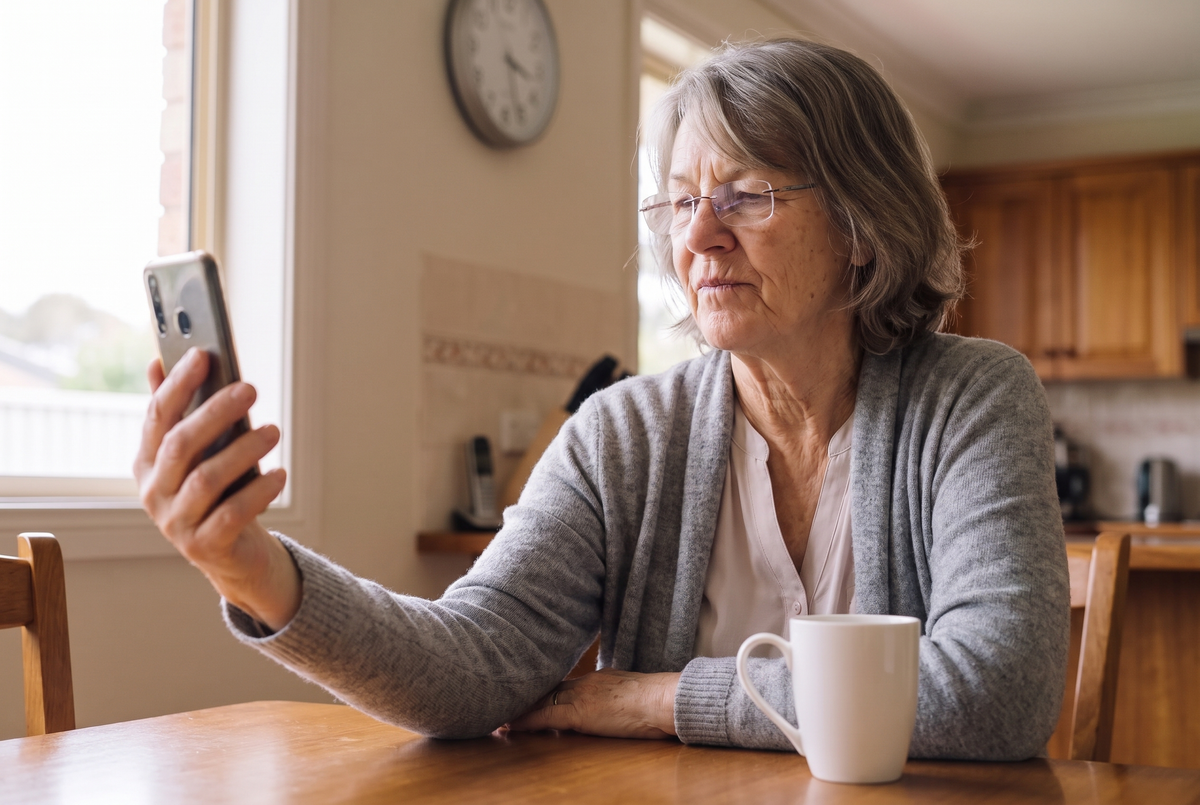
In March my son-in-law Greg texted me a link. No message. Just the link.
It was a survey from AAA, the roadside people. More than a thousand drivers, all ages. Six in ten said headlight glare was a problem after dark. Of those, nearly three in four said it had gotten worse in the last ten years. Nine in ten said it came from oncoming headlights.
Greg is 41. It turned out the hill on Route 9 gets him too.
I read it at the kitchen table with my coffee going cold, and I felt something I hadn't felt in four years. Relief. It wasn't just me.
The stadium lights are real
Once I started reading, it was all there. I'll give it to you the way I'd give it to a customer at the shop.
So I was right. Every car on the road did get stadium lights.
I'd like to tell you that's where the story ends. It isn't.
The night Greg drove
In April, Frank's sister had her 70th birthday two towns over. Greg drove us home, Frank in the back, me up front in the passenger seat for once.
We came up the hill on Route 9. A pickup came over the top with those blue-white lights.
Greg squinted, said "that's a bad one," and kept talking about the Phillies.
I was still sitting there with a white wall in front of my eyes. I wasn't even driving. And I was still waiting for the road to come back, a good while after Greg had already moved on.
Same truck. Same lights. Same windshield. Different eyes.
Nobody tells you this part
That night I couldn't sleep, so I did what my granddaughter does. I looked it up.
Here's what nobody had told me in 66 years.
The lens inside your eye, the clear part behind the colored part, changes as you get older. The government's MedlinePlus health encyclopedia says it plainly: the lens becomes yellowed, less flexible and slightly cloudy, you may be less able to tolerate glare, and problems with glare and darkness can make night driving harder.
An eye-care site reviewed by an optometrist put it in one line I've never forgotten. As the lens becomes less clear, light scatters inside the eye.
So when one of those stadium lights hits a 41-year-old eye, it goes more or less where it's aimed. When it hits a 66-year-old eye, more of it bounces around in there.
That's what nobody tells you: today's LED headlights hit eyes over 60 differently. Brighter lights on the road, and a lens that has quietly changed with age. Both at once.
It wasn't just brighter bulbs. It was also me. Not me going soft. Me being 66.
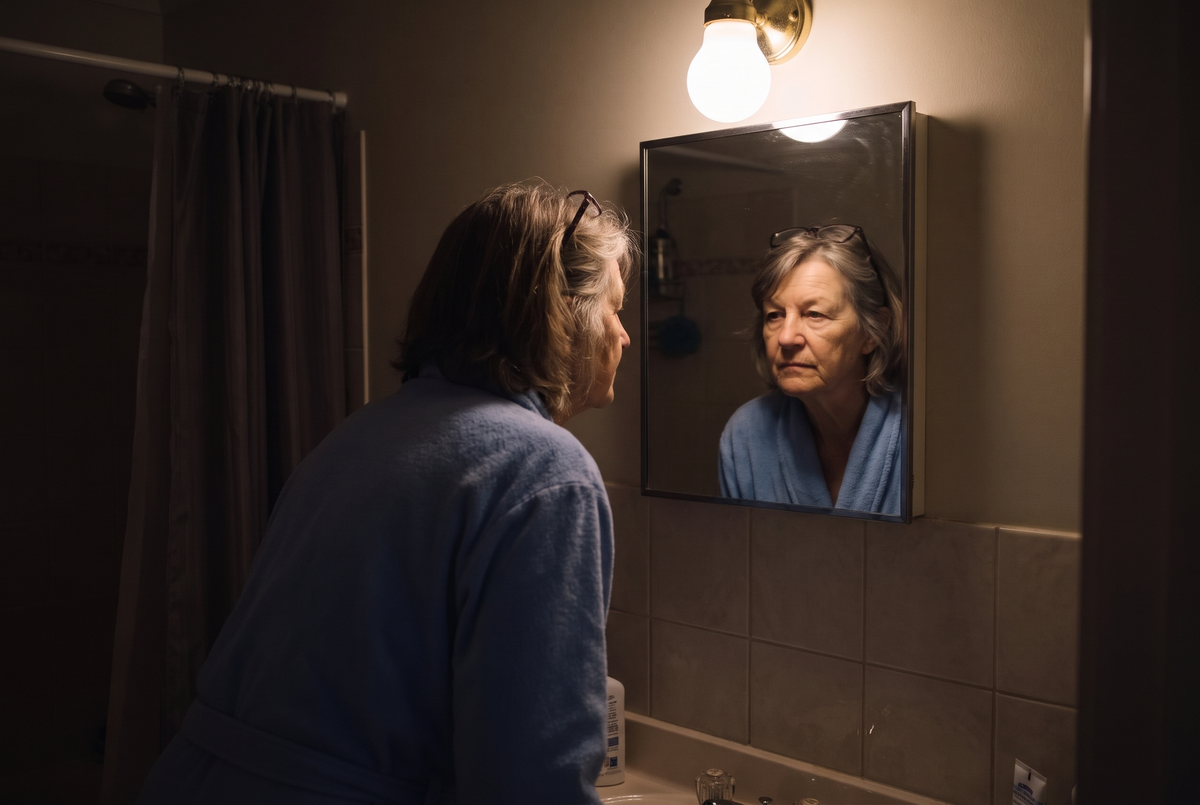
And here's the strange part. That made me feel better, not worse. For four years I'd been afraid of something I couldn't name. Now it had a name, and the name was ordinary. It happens to everybody's eyes. It's why the first thing on my list had to be the eye doctor.
What I did first
I made an appointment and told the eye doctor the truth. All of it. The hill, the four years, the yellow glasses, the night Greg drove.
Please do this first. If night driving has changed for you, see your eye doctor before you buy anything, including what I'm about to tell you about. The lens changing with age is normal, but only an exam can tell you what's going on in your own eyes, and some changes need a doctor's care. Nothing in a bottle replaces that visit.
My exam showed my prescription had drifted more than I'd noticed. She told me what to watch for and to come back in a year. She was kind about it, and she didn't once say the word "keys."
The two things I can't change, and the one I can
Driving home that day, I added it up.
I can't change the road. I can't lower a stranger's truck or make Washington move faster.
I can't turn my eyes back to 41, either. Nothing I eat or swallow is going to undo 66 years, or make a headlight less bright, and I don't trust anyone who says otherwise.
But there is a part I can do. Not for the road. Not for the headlights. For the eyes themselves.
What I learned about the eye itself
In the waiting room I'd read something I'd never heard in my whole life.
The clear fluid at the front of your eye carries vitamin C at 20 to 70 times the level in your blood. Your body doesn't put something in one place at seventy times the normal amount by accident.
It works as a team, too. Vitamin C helps recycle vitamin E, so the E can keep doing its job.
Zinc is concentrated in the eye, most of it in the layers at the back. And zinc contributes to normal vision. That's not me talking, that's what zinc does.
Lutein, the yellow pigment in leafy greens and marigold flowers, comes only from what you eat. Your eyes gather it into the center of the retina.
My body can't make any of those. They come from the plate, or they don't come at all.
I'd spent $90 on the light coming in. I hadn't spent a dime on the eyes doing the seeing.
What I take now
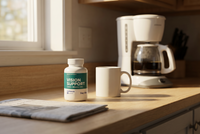
Frank found it, which surprised me. He's the one in the family who reads the back of the box. I'd finally told him everything, and two days later there was a bottle next to the coffee maker.
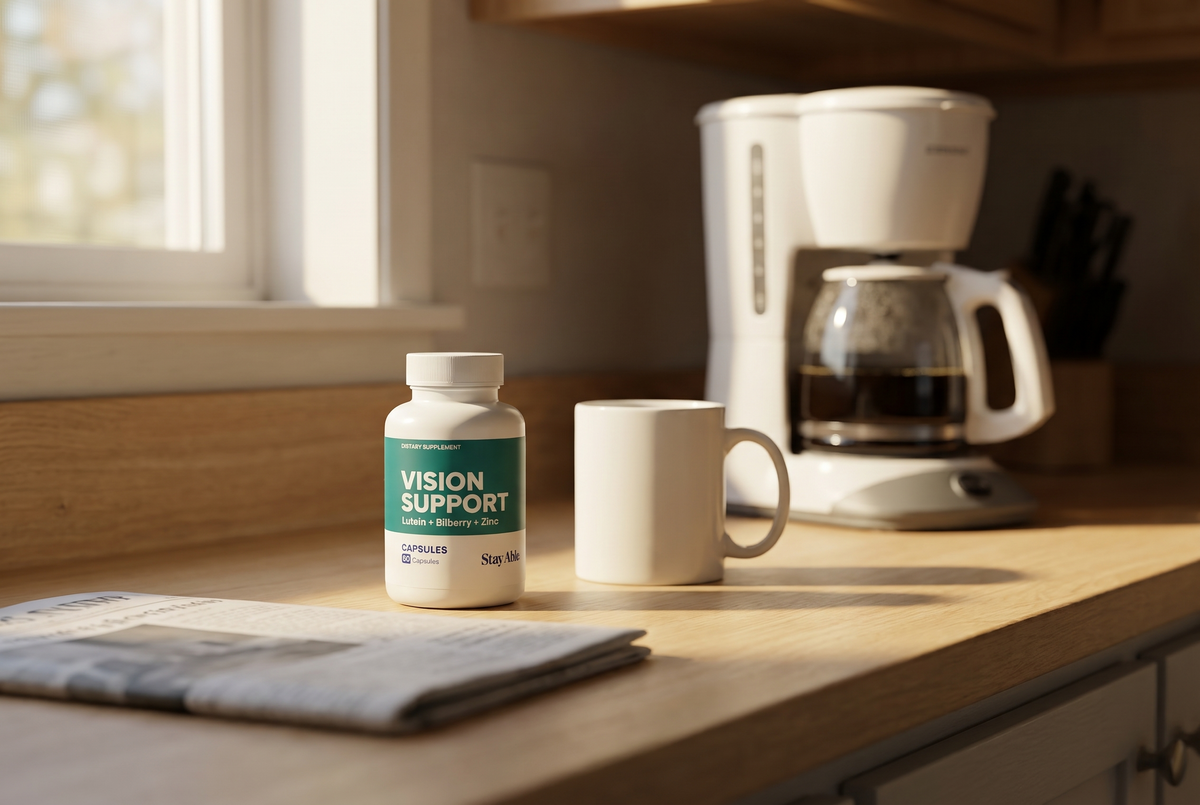
What sold me first was what Stay Able Vision Support doesn't pretend to be.
It isn't glasses. It isn't a tint. It doesn't sit between me and the road. It doesn't say one word about headlights, glare or night driving, and after four years of things that did, I found that restful.
What's in it is a short list of nutrients the eye uses:
Two capsules a day with breakfast. It supports healthy eyes as part of a daily routine. That's the whole promise. I checked.
What it is NOT (I checked)
I've been sold yellow glasses twice. I read the small print now. Here it is, straight.
So why bother? Because the road is out of my hands, and so is my age. The nutrients my eyes use every day are not. That's the part I can do for the eyes themselves.
My Tuesday-and-Thursday checklist
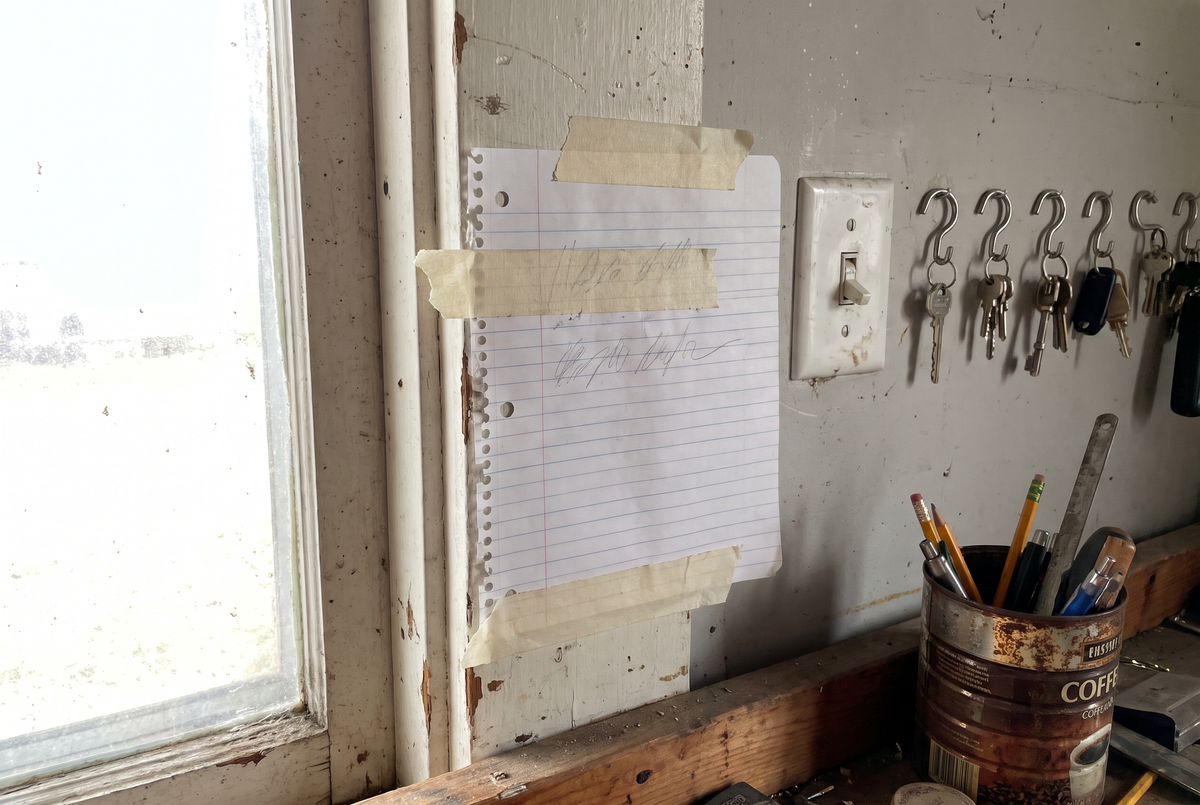
The old me bought gadgets. The new me taped a list inside the garage door by the light switch. Most of it is free.
1. Eye exam every year, and tell the doctor the truth about night driving.
2. Windshield cleaned inside and out, every Sunday. The film on the inside turns one headlight into a smear.
3. Headlights checked and aimed. AAA recommends it. Any shop can do it.
4. Dash lights down as low as I can still read the speedometer.
5. Eyes to the white line. When a truck comes over the hill, look down and right at the edge line until it passes.
6. Yellow glasses in the donation bin. Anything that makes the dark parts darker stays off my face.
7. Stay Able Vision Support with breakfast. For the eyes, not the light.
How it's going
I'm not going to tell you a capsule changed what happens on the hill. It didn't promise that, and I won't either.
What changed is that I stopped hiding it. I told Frank the night I came home from the eye doctor. He was quiet for a minute, then he said, "Susan, I've seen you grip that wheel for four years. I was waiting for you to tell me."
I told our daughter, too. The conversation I'd been dreading was about ten minutes long and ended with her asking for the AAA link so she could send it to her friends.
I do the right things, in the right order, for the equipment I've got. The exam. The windshield. The white line. The capsule with breakfast.
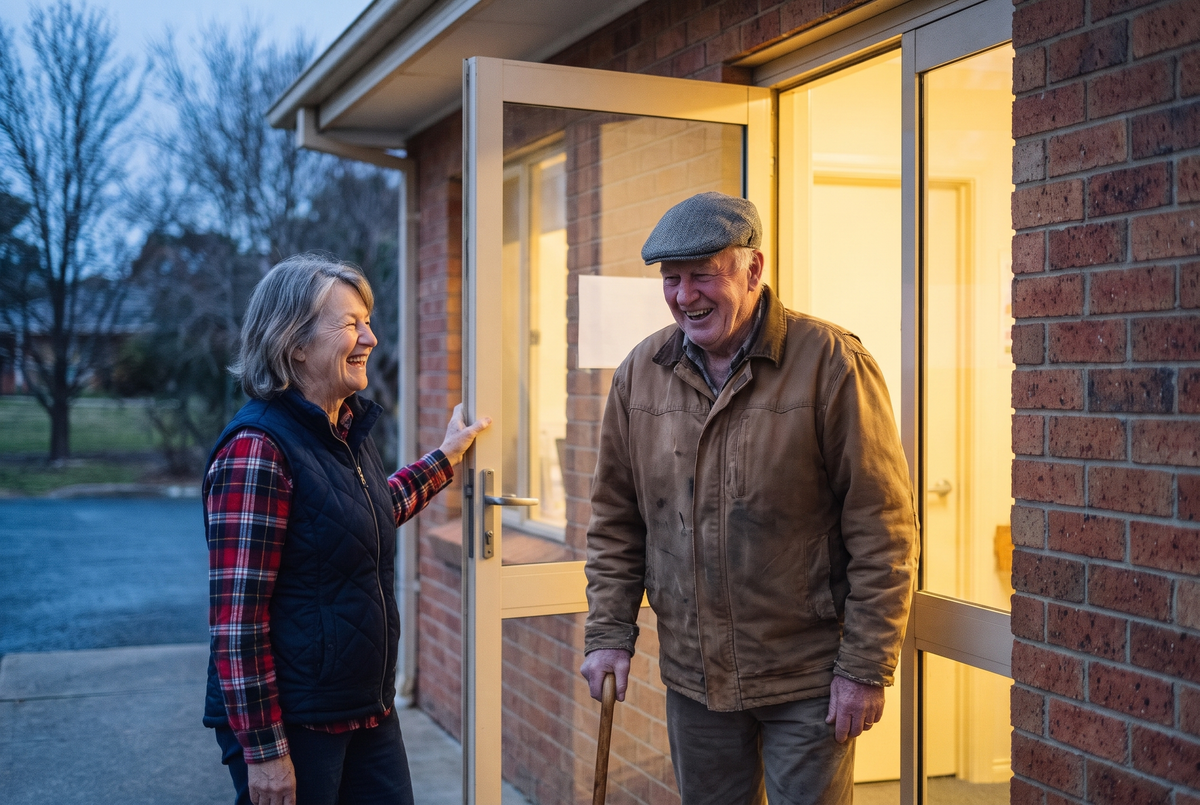
Thursday at 6:15 I'll be in that parking lot, same as always, with his cap and his cane on the seat beside me.
Who this is for
You've asked yourself when every car on the road got stadium lights.
You've been avoiding night driving when you can, and you haven't said why out loud.
You've wondered if it's just your glasses, and new glasses didn't settle it.
You're over 60, and nobody told you the eye itself changes too.
It's not for anyone hoping for a pill that fights glare or headlights. That doesn't exist.
What it costs
I spent about $90 on glasses that live in the donation bin now.
Stay Able Vision Support is $37.99 for a one-month bottle. If you'd rather not run out, Subscribe & Save brings it to $29.99 a month (that's the subscription price; skip or cancel anytime). A 3-month supply is $99.99, and 6 months is $179.99.
It comes with a 100-day money-back guarantee. If it's not for you, email us within 100 days and we'll refund you.
You might be wondering
Isn't this just my glasses?
Start there. Get the exam; my prescription had drifted. But glasses correct how light focuses. They don't feed the eye. This is the other half: nutrients your eyes use every day.
Will this help with the headlights?
No. Nothing you swallow will, and this doesn't claim to. The headlights are a road problem. The fixes for the road are on the checklist and in Washington.
Will it undo what age does to the lens?
No. That's what the eye doctor is for. This supports healthy eyes as part of a daily routine, at any age.
I take other medications. Is it okay for me?
Show the label to your pharmacist or doctor before you start, especially if you already take a multivitamin or another eye vitamin, so you don't double up on zinc.
Can't I just eat better?
You should. Frank and I try. This is the backup for the days the plate isn't perfect.
Will I feel it working?
No. It's daily support, not a switch.
What if it's not for me?
It comes with a 100-day money-back guarantee. If it's not for you, email us within 100 days and we'll refund you.
Two choices
Choice one. Keep deciding it's just you, or just your glasses. Buy a third pair of yellow lenses. Keep taking the long way home and telling him it's for his knee.
Choice two. Believe the six in ten, and believe your own age, too. Book the eye exam and tell the doctor everything. Tape the checklist by the garage door. Tell the people who ride with you. And start looking after the eyes themselves, every morning.
The stadium lights aren't going anywhere. Neither, I hope, are you.
P.S. If you do only one thing after reading this, tell somebody. Your husband, your daughter, your son-in-law, your eye doctor. I carried it alone for four years, and the telling took ten minutes.
P.P.S. Nobody tells you the eye changes with age. Now somebody has. Pass it on to a friend who drives at night.
Sources: AAA newsroom, March 24, 2026; Reuters, October 6, 2026; ABC, April 2023 (IIHS data); MedlinePlus, Aging changes in the senses; All About Vision, older drivers and night driving; American Academy of Ophthalmology, yellow-lens glasses; Nutrients, 2020.
These statements have not been evaluated by the Food and Drug Administration. This product is not intended to diagnose, treat, cure, or prevent any disease. Individual experiences vary. Dramatization: Susan Miller is a composite character; this story is a dramatization and does not describe an individual customer's experience.