Two Bottles Said Boswellia on the Front. I Turned Them Over, and the Number on the Back Was the Whole Difference.
The knee studies I read on boswellia used an extract made to a stated level of one specific acid. The bottle I'd bought didn't print that number. The one I take now does.
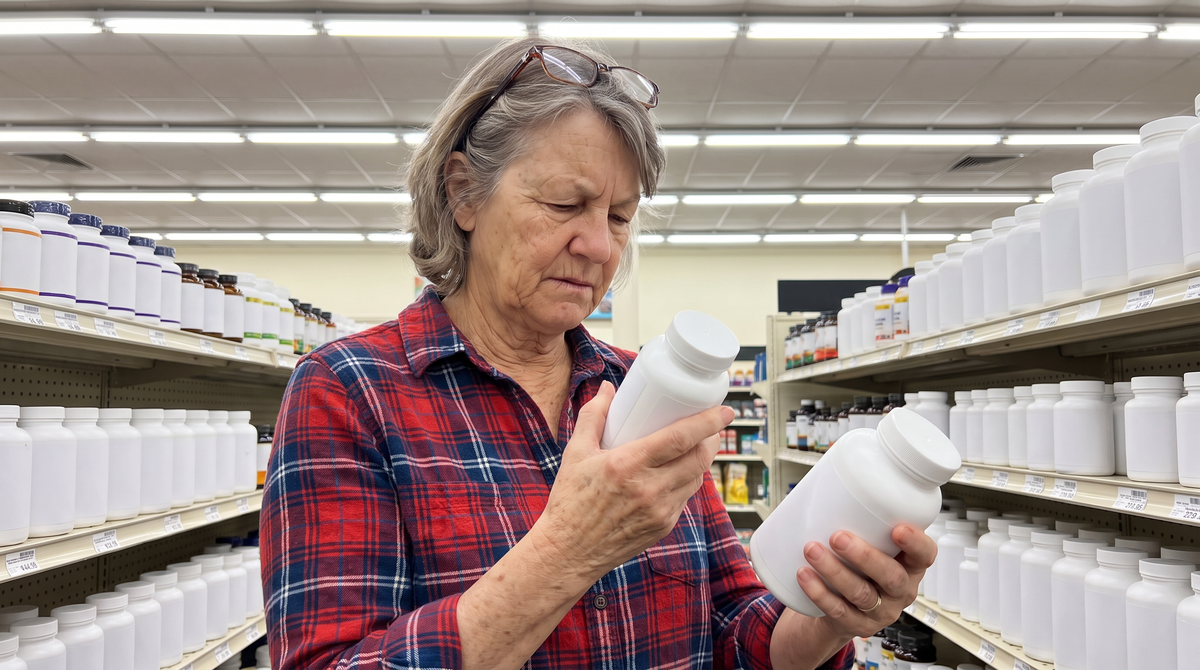
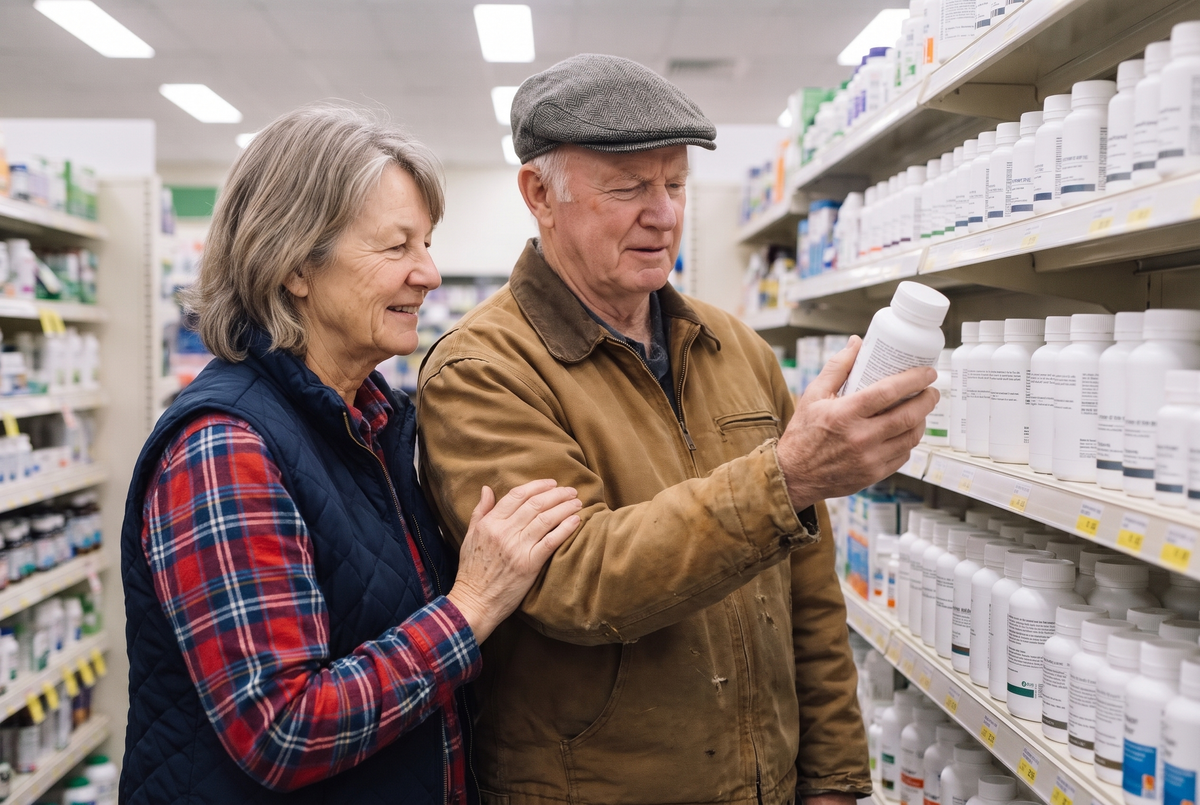
I was standing in the aisle at the drugstore on Route 9 with a bottle in each hand.
Both of them said Boswellia on the front. Same plant. Same size bottle. One was eleven dollars and one was twenty-six, and I'd have told you, a year earlier, that the fifteen dollars was the shopkeeper's mark-up and nothing more.
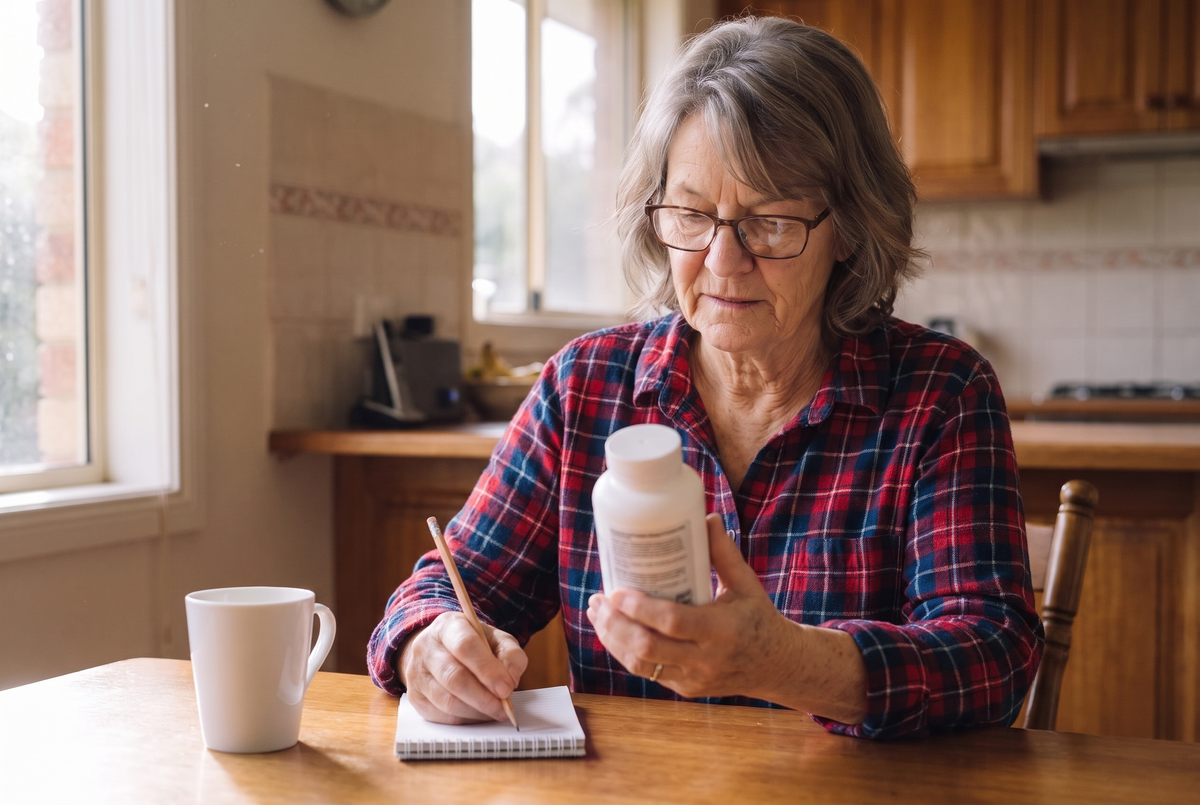
So I did what I do with everything now. I turned them over.
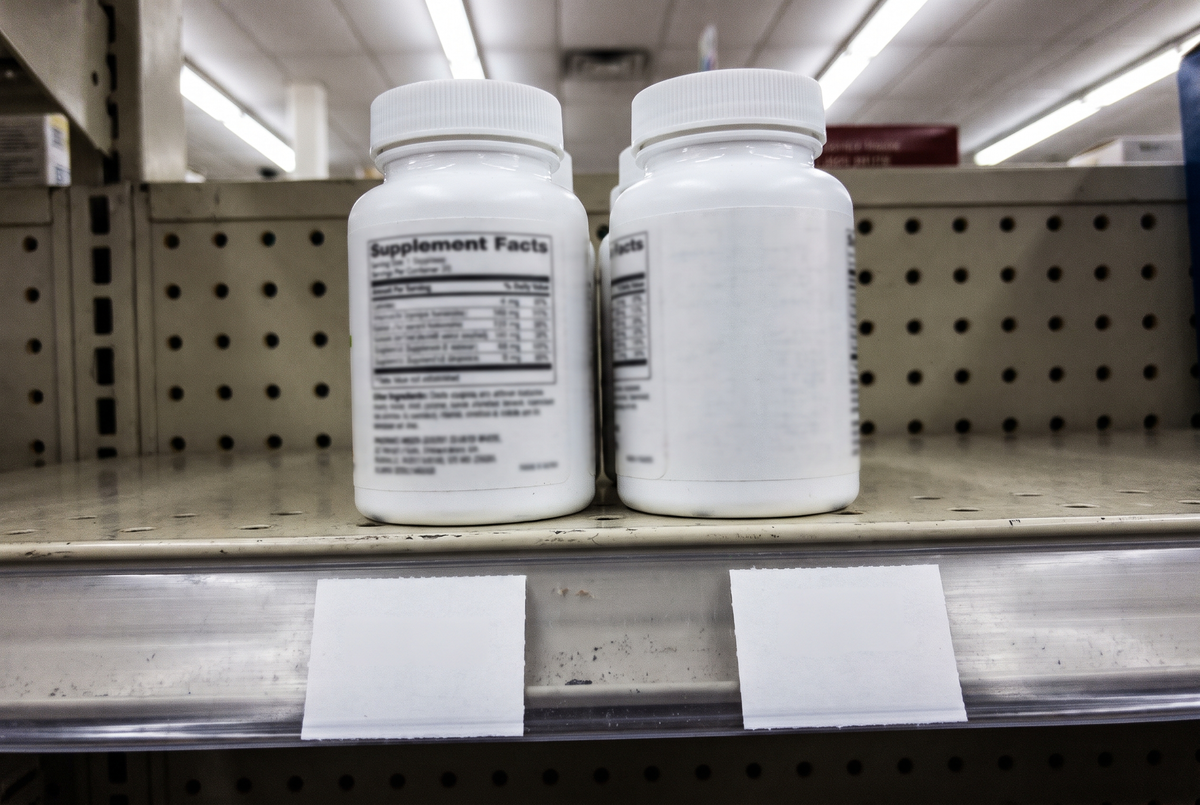
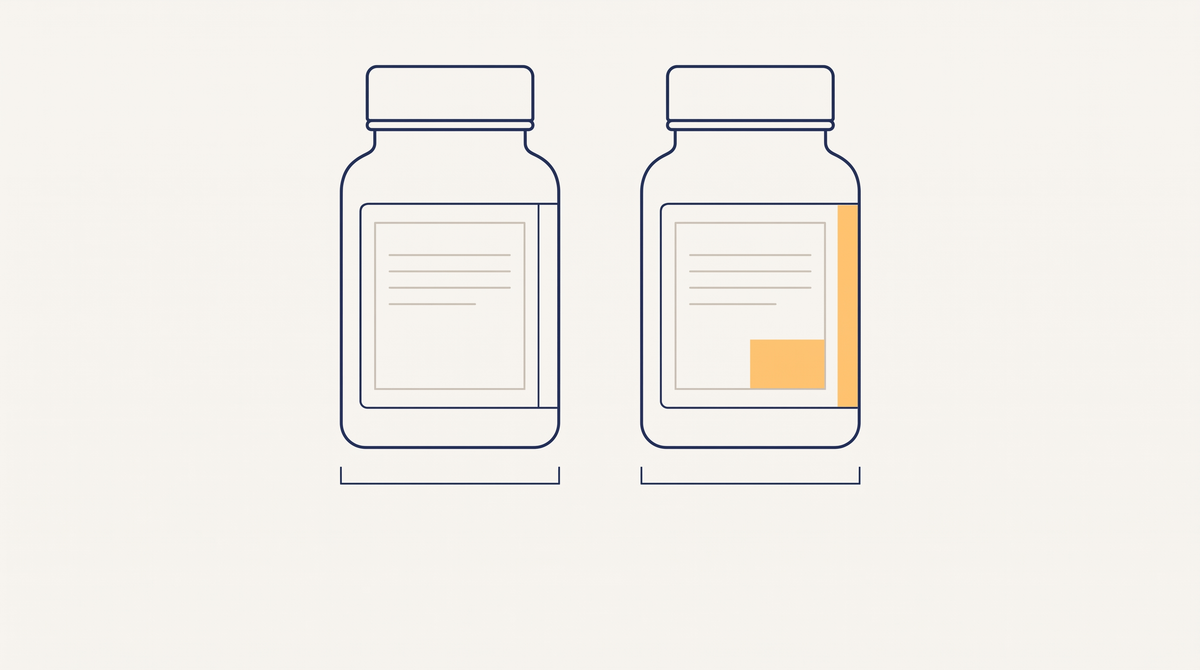
The eleven-dollar bottle said Boswellia serrata extract and a weight in milligrams, and that was all. The twenty-six-dollar bottle said the same weight, and then under it, in smaller type, a line that said standardized to 65% boswellic acids.
I stood there a good while. A young man restocking the shelf asked if I needed help. I said no, I was reading.
Why I Read The Back Of Things
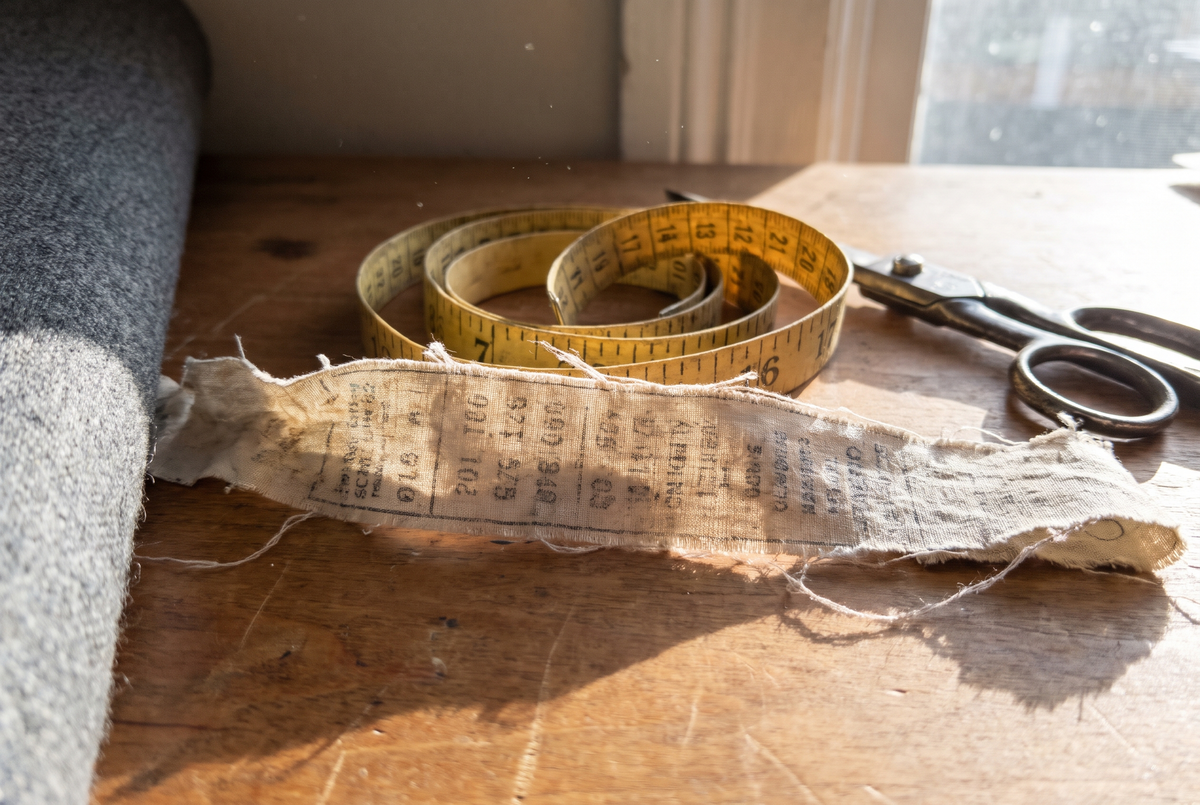
I ran an alterations shop for 31 years, and the first thing I learned in that trade is that the front of a label is for selling and the back is for finding out.
A bolt of cloth comes in with WOOL stamped on the end in letters you can read across the room. You unroll a yard and look for the little printed strip, and the strip says 20 percent wool, 80 percent something that will pill by Easter. The word on the front wasn't a lie. The number on the back was the whole difference.
I could tell you which customers would be back in a month, unhappy, by which ones bought on the word.
I never once thought to do that with a bottle of capsules. Not for years. I'd read the front, I'd read the price, and I'd buy the cheaper one, because I'm from a family that buys the cheaper one.
The Devil's Claw That Taught Me
The first bottle I ever turned over was devil's claw, and I only turned it over because a stranger told me to.
I'd taken a cheap one for a couple of months. Nothing. I'd decided devil's claw was a story people told, and I was about to say so on one of those review pages where you rate what you took.
And there, a few reviews down, was a woman who'd posted in May of 2015. She was in the same age bracket I'm in. She said the cheaper devil's claw bottles, the ones with less than 40 percent harpagosides, hadn't worked for her.
I had to look up what a harpagoside was. Then I went to the cupboard and got my bottle out and turned it over, and there was no percentage on it at all. Not a low one. None.
I'm not telling you her bottle worked and mine didn't. I'm telling you I'd been rating a plant when I should have been rating a label. I'd never checked whether I'd taken the thing anybody had tested.
The Boswellia That Did Nothing
So you'd think I'd have learned. I hadn't.
A year later my doctor, at my annual, mentioned boswellia in passing. She said some of her patients take it, and that she had no view either way, and that if I wanted to try it the only harm would be to my wallet. I went to the drugstore and bought the cheap one. Of course I did.
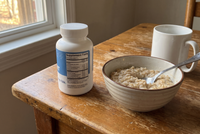
I took it for three months, with breakfast, every day. I can tell you exactly what it did. Nothing. No change I could put my finger on, and no side effects either, which is the kindest thing I can say about it. It went in the cupboard with the devil's claw.
Frank asked me, when he found it, whether it had worked. I said boswellia doesn't do anything.
That's the sentence I want to take back. Not because I know it does something. Because I'd said it about a plant, when the only thing I'd actually tested was one eleven-dollar bottle with no number on the back.

What The Number On The Back Is
After the devil's claw woman, I did something I'd never done for a capsule. I went and found the studies.
Not the ads. The studies. My daughter showed me how to find them, and I read the parts I could follow and skipped the parts I couldn't, the way you read a sewing pattern in a language you half know.
Here is what I understood, and I'll put it the way I'd put it to a customer holding two bolts of cloth.
Boswellia is a tree resin. Inside the resin is a family of acids, and they go by the family name: boswellic acids. The studies on boswellia for sore knees that I read weren't done on the raw resin. They were done on an extract that had been made to a stated level of those acids, and the level was printed in the paper.
In the resin as it comes off the tree, the acids are a share of the whole, and the share varies from batch to batch and tree to tree. So a bottle that prints no percentage is telling you the truth about the plant and nothing at all about how much of the acids are in the capsule. You could have a lot of resin and very little of the thing the studies counted.
Two bottles. Both say boswellia on the front. Both are honest labels. And the number on the back, the one that names the acids and gives you a percentage, is the whole difference between them.
Whether It Was Tested
Now, I want to be careful here, because I've been sold to for 66 years and I know how this part usually goes.
I am not going to tell you what boswellia does inside a knee. I don't know, and neither does anyone selling it to you, and the people who ran those studies would tell you the same if you asked them straight. The studies I read were small, they were paid for by a company that makes the extract, and I'm a seamstress, not a scientist.
What I can tell you is simpler than that, and it's the only thing I'm sure of.
The extract they tested had a number on it. The eleven-dollar bottle in my cupboard didn't. So whatever those studies found, good or bad, I had no way of knowing whether I'd taken anything like the thing they found it about. I'd taken a cousin of it, maybe, and then told my husband the whole family was useless.
That's the mistake. Not buying the cheap one. Rating the plant on a bottle that was never the plant they tested.
The Number Decides
I've come round to a belief, and I'll say it plainly, because I think a lot of you already hold it and have been talked out of it by the front of a label.
The number on the back decides whether it can work.
Not the word on the front, not the price, not the leaf on the picture. If the number that names the acids isn't there, you haven't bought a bottle you can check, and you can't find out anything at all. You can only find out what I found out: that an eleven-dollar bottle with no number did nothing for me, which tells you about that bottle and not one thing more.
And a bottle that prints the number is doing something the other one won't. It's making a claim you can check. You can read it, you can write it down, you can ask the pharmacist what it means, and you can ask the company for the paper that says the batch in your hand actually has it. The one that only prints the family name is asking you to take it on faith, at eleven dollars, and faith is what I'd been buying for years.
So that's what I look for now. Not the plant. The number.
What I Take Now
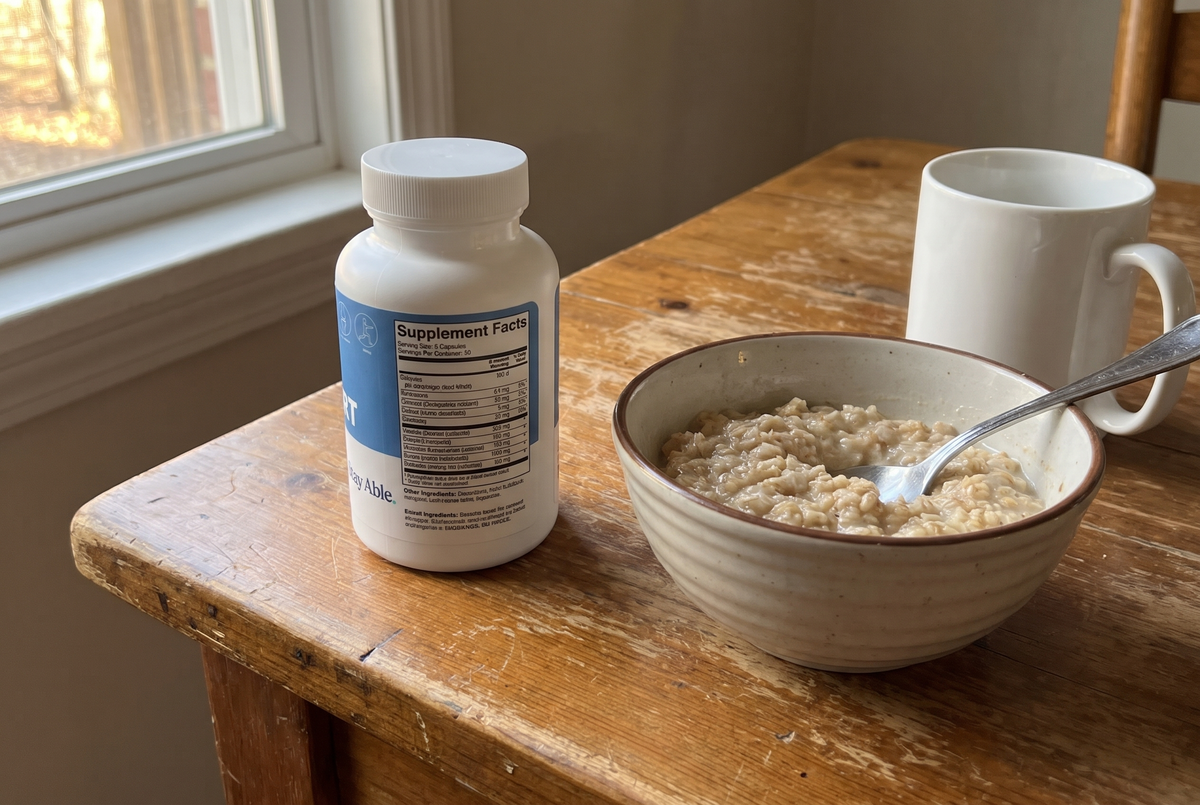
I picked Stay Able Joint Support for three reasons, and none of them is a promise.
The first is the number. The back of the label names the acids and prints the percentage: boswellia serrata extract, 100 mg, standardised to 65% boswellic acids. I didn't have to write to anyone to find out. It's on the bottle, where I can read it without my glasses.
The second is that a printed number is something you can hold a company to. Write to them with the batch number off the bottom of the bottle and ask for the certificate for that batch. A company that prints a percentage has a piece of paper behind it. One that prints nothing has nothing to show you.
The third is what the label doesn't say. It doesn't tell me what the capsule does inside the joint, and after a cupboard full of bottles that promised the world on the front, I found that restful.
What's in it, from the label:
MSM (methylsulfonylmethane), 300 mg
Glucosamine HCl (GlucosaGreen®, vegetal), 200 mg
Turmeric powder (root), 200 mg
White willow bark extract, 150 mg
Boswellia serrata extract (resin), 100 mg, standardised to 65% boswellic acids
Black pepper extract (fruit), 10 mg, standardised to 95% piperine
Hyaluronic acid, 10 mg
Two capsules, with breakfast. It's a daily thing, taken for months.
That's the whole promise. There isn't a bigger one on the label, and I'm not going to make one up.
What It Is NOT (I Checked)
I read the small print now. Here it is, straight.
It isn't a tested result. It's a bottle that prints its number. Whether it does anything for you is a separate question, and the only person who can answer it is you, over months, the way I'm answering it for myself.
It isn't the cheap one. It costs more than the eleven-dollar bottle, and the difference is the number on the back. If the number doesn't matter to you, buy the cheap one and save the money. I did, twice.
It makes no claim about what happens inside the joint, and I won't make one for it. Anybody who tells you what a capsule is doing to the inside of your knee is guessing, and you've paid for guesses before.
It isn't a days thing. Nobody I trust found out in a week. I took the cheap boswellia for three months, and I'll give this one at least that.
If you want something that promises on the front, this isn't it. If you want a bottle with the number where you can check it, keep reading.
My Read-The-Back Checklist
The old me bought on the word. The new me turns the bottle over before it goes in the basket. Everything on this list is free, and the capsule isn't on it.
1. Turn it over in the aisle. Before the price, before the picture. If the back is shorter than the front, put it down.
2. Look for the one, not the family. A plant name and a weight tell you what's in the capsule by the pound. A line that says standardized to and names a specific thing with a percentage tells you what's in it by the part that was studied. Those are different sentences.
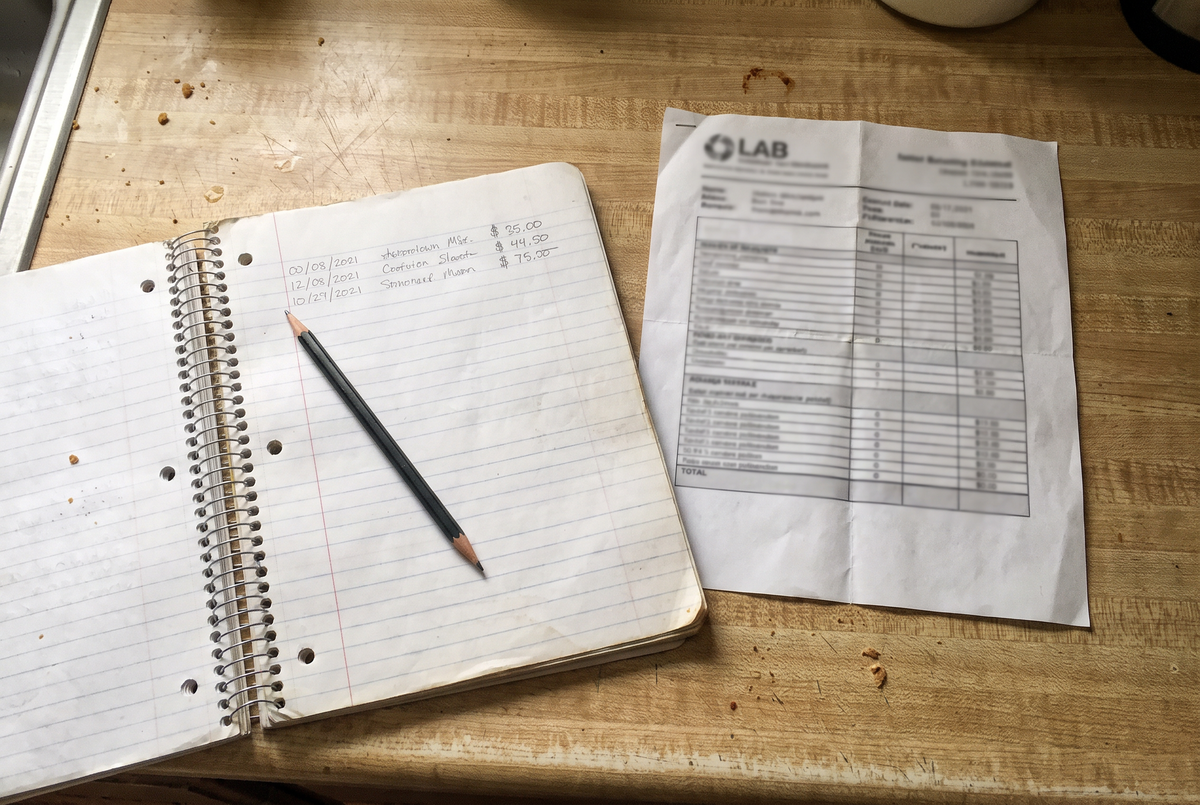
3. Write the number down. In a notebook, with the date and the price. Next year you'll want to know what you paid for what.
4. Ask for the paper. Email the company and ask for the certificate of analysis for your batch. A company that prints a number can show you where it came from. One that can't has told you something.
5. Ask the pharmacist what the word means. Mine knew what boswellic acids were. She also knew what was in the aspirin family, which is point 7.
6. Run the same check on what's already in your cupboard. You don't need to buy mine to start. Turn over every bottle you own tonight and see how many print a number for the thing that was studied. I'd guess fewer than you think.
7. Show the doctor the label, especially if you take anything for your heart or your blood, or were ever taken off daily tablets for your stomach or kidneys.
8. Stop rating plants. Rate bottles. A cheap bottle that did nothing is a fact about that bottle. It isn't a verdict on the plant, and I said it was for a year.
How It's Going
I'm eleven weeks in.
I'm not going to tell you what my knees have done, because that isn't what this page is about and I'd be guessing. What I'll tell you is that for the first time since the devil's claw woman in 2015, I'm taking a bottle I can actually read, and if it does nothing for me, I'll know exactly what I tested. That's worth fifteen dollars to me. It wasn't, for years, and I was wrong.
Frank reads the backs now too. He reads them out loud in the aisle, which is a different problem.
Who This Is For
• You've stood in the aisle with two bottles that say the same thing on the front, and bought the cheaper one on faith.
• You've tried boswellia, or devil's claw, or turmeric, felt nothing, and decided the plant doesn't work.
• You'd rather pay more for a number you can check than less for a word on the front.
• You want what the label says and nothing more, and you'd rather a plain refund window than a bigger promise.
It's not for anyone hoping the number on the back is a promise about what happens in the joint. It isn't. It's a promise about what's in the capsule, and that's all a label can honestly make.
What It Costs
I spent, over the years, something like $90 on bottles with no number on the back, and I couldn't tell you to this day whether any of them had the thing anyone tested, because none of them said.
Stay Able Joint Support is $29.99 a bottle, and a bottle is one month.
If it's not for you, you get in touch within 100 days and they refund what you paid. That's the whole of the terms, and I read them the way I read everything now.
You Might Be Wondering
"Does the number mean it works?"
No. It means you know what's in the capsule, at a level you can read. Whether it does anything for your knees is yours to find out, over months. The cheap bottle couldn't tell you either way. This one at least lets you ask the question.
"What does standardised mean?"
That the maker measured the extract so every batch has at least that share of boswellic acids in it. It's a statement about what's in the capsule. It isn't a statement about what the capsule does, and I'd be wary of anyone who reads it as one.
"Why not just buy a stronger cheap one?"
Because a bigger weight of the family isn't more of the one. You can double the milligrams of a bottle that doesn't print the acid and still have no idea what you're doubling.
"I'm on aspirin or a blood thinner. Can I take this?"
Ask your doctor or pharmacist, and show them the label, before you take the first one. Stay Able Joint Support contains white willow bark, which is in the aspirin family. If you were ever taken off daily tablets for your stomach or your kidneys, that's their conversation, not mine.
"How long before I know?"
Months, not days. I gave the cheap one three. I'm giving this one at least that, and I'm not reading anything into a good week.
"Can I get the certificate?"
Ask. Email them with the batch number off the bottom of your bottle and request the certificate for that batch. If the number they send you doesn't match the label, you'll have found out something worth knowing, and so will I.
"Do I have to buy yours to start reading labels?"
No. Turn over what's in your cupboard tonight. The checklist is free.
Two Choices
Choice one. Keep buying on the front of the label. Keep taking the eleven-dollar bottle for a few months, feeling nothing, and deciding the plant doesn't work. Keep a cupboard full of cousins.
Choice two. Turn the bottle over. Find the line that names the acids and gives you a number. Buy the one with the number, write it down, and find out for yourself, over months, what it does or doesn't do for you.
Either way, both bottles say boswellia on the front. I'd rather you knew what the back said.
P.S. If you only do one thing after reading this, go to the cupboard and turn over every bottle you own. Count how many print a number for the one thing that was studied. It took me four minutes, and I've never bought on the front of a label since.
P.P.S. I never found out who the devil's claw woman was. She posted in May of 2015 and I've thought about her once a week ever since. If that was you: thank you. You taught a seamstress to read.
Dramatization. “Susan Miller” is a narrator persona created for this article; this story is a dramatization and does not describe an individual customer's experience. Individual experiences vary and no result is typical. This is not medical advice — talk to your doctor before changing anything you take. Stay Able Joint Support is a dietary supplement. These statements have not been evaluated by the Food and Drug Administration. This product is not intended to diagnose, treat, cure or prevent any disease.