
I Was Exhausted on My Weight-Loss Shot and My Bloodwork Came Back Normal. Then a Pharmacist Asked Me One Question That Changed Everything.


I want to tell you about the Thursday I sat in my car in the office parking lot for eleven minutes trying to gather the energy to go to work.
Nothing was wrong. I wasn't upset.
But I was so tired that walking through a door felt like a project I'd need to plan.
I'd taken my shot on Wednesday night. By the following afternoon I was hollowed out.
And here's the part that had started to scare me: it happened every single week, on the same day, like something on a timer.

Fatigue that keeps a schedule
If you're on a weight-loss shot, you may already know the pattern I mean.
The night of the injection, nothing. The next day it starts creeping in. The day after that, you're a passenger in your own life.
Then it lifts, you get a few decent days, and you do the whole thing over.
I read someone describe it as feeling like a zombie for two days. That pretty much sums up my experience.

The 2 pm drop was the worst of it.
At work, I'd hit a wall so hard I started scheduling my meetings for the morning, because I knew I'd be useless by two.
And there was a fog on top of the tiredness that I found harder to explain. I'd read the same email three times and didn't absorb a word.
Someone would ask me a straightforward question and I'd need a second to find the words.
I was half a step behind everything.
The part you're not allowed to complain about
Here's what made it hard to talk about.
The shot was working. I was thirty-one pounds down. My jeans fit.
People at work kept telling me I looked great! And I'd smile and say thank you and go home and fall asleep at eight o'clock with the lamp on.
You can't complain about that. You get the thing you've wanted for fifteen years, and you're going to say you're tired?
So I said nothing. And I got very good at rearranging my life around those two days a week.
But underneath it, quietly, I'd started thinking something worse.
With nausea you at least know what it is. It's unpleasant and it's obvious and everybody warns you.
Exhaustion is different. Exhaustion makes you wonder whether the medication is even worth it.
That's the thought I couldn't get rid of at 2 pm on a Thursday. Not "this is annoying." More like: what is this doing to me?
So I went and got checked.
I went to my doctor, told her the whole thing, and she sent me for bloodwork. Iron, thyroid, B12, vitamin D, the works.
The results came back and everything was in range.
She was pleased. Nothing was wrong with me.
I sat in the car afterward and cried, which I realize sounds ridiculous.
Because if nothing is wrong, and I feel like this, then what exactly am I supposed to do about it?
Everything I tried, in order
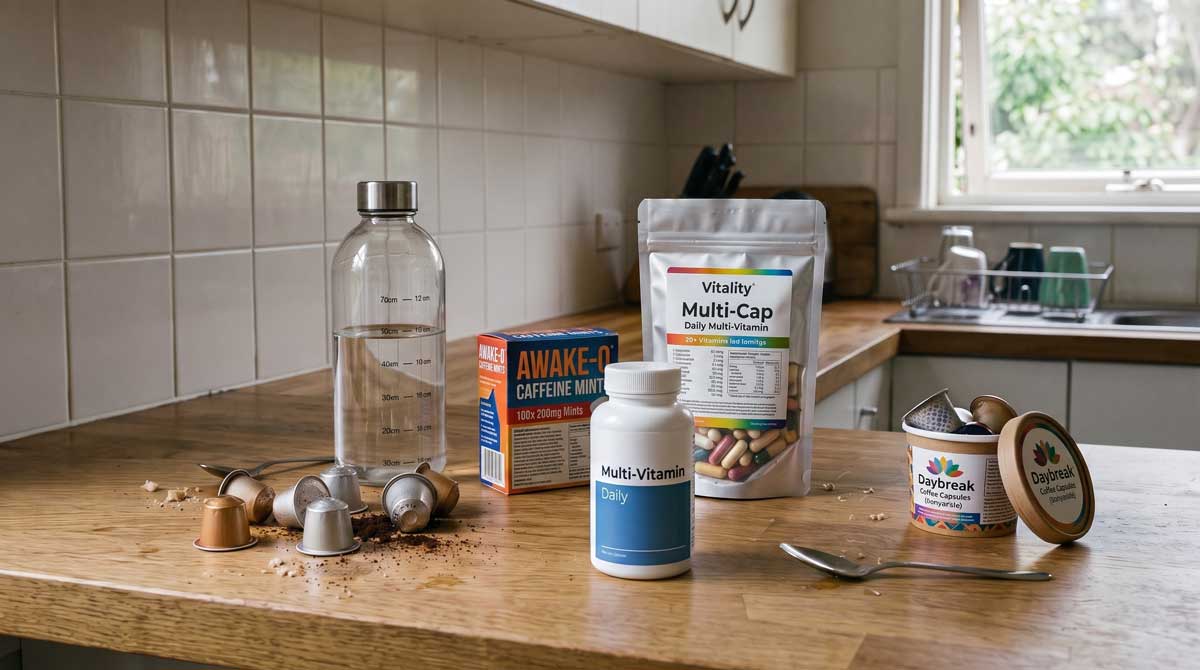
More sleep. Early nights all week.
Naps on the sofa the second I got in.
One Saturday I stayed in bed until eleven and got up feeling worse than when I'd lain down.
Nine hours and I woke up wrung out.
Coffee. Then more coffee.
Then coffee on an empty stomach, which on these shots is its own bad idea.
I got jittery and queasy and still hit the wall at the same time.
Water. I bought the big marked bottle, the one with the times printed up the side.
I drank it every day. I ticked it off like homework.
Nothing. Whatever was flattening me, it wasn't thirst.
A regular multivitamin. The big drugstore one. It's the size of a lozenge, and on an empty stomach it sat there like a stone — twenty minutes later I was queasier than before I took it.
Into the drawer it went.
The green gummies. A colleague swore by them, the ones that claim to cover your whole day's nutrition.
But sugary chews at seven in the morning when you have no appetite is the last thing you want.
Protein. Everyone tells you to get more protein in.
I bought the shakes. I'd get a third of the way down one and just couldn't stomach it anymore.
Then I stopped fixing it and started scheduling around it.
I moved my shot to Friday night so the bad days landed on the weekend.
Which worked, in the sense that my job stopped suffering. I just gave up my Saturdays and Sundays instead.
That's the point I'd reached. Not looking for a solution anymore.
Just quietly arranging my life around two dead days a week and calling it the price of the results.
The question I couldn't answer

It was a pharmacist who fixed this for me, out of the blue.
I was picking up my prescription and I'd put a box of caffeine tablets on the counter.
She rang them up, then asked how the shot was going.
I was feeling pretty low, so I gave her the honest answer instead of the polite one.
The two dead days. The 2 pm wall. The bloodwork that came back clear and left me nowhere.
She listened, and then she asked me a question that I still think about.
"What did you actually eat yesterday?"
I opened my mouth to answer and had to count.
Half a yoghurt in the morning. Four, maybe five bites of dinner. A handful of crackers somewhere in between.
Yesterday was the day after my shot. That was the whole day's food, and until she asked, I hadn't noticed.
"That's the medication," she said. "It turned your appetite down — that's the point of it, that's why it's working. But there's a flip side nobody walks you through.
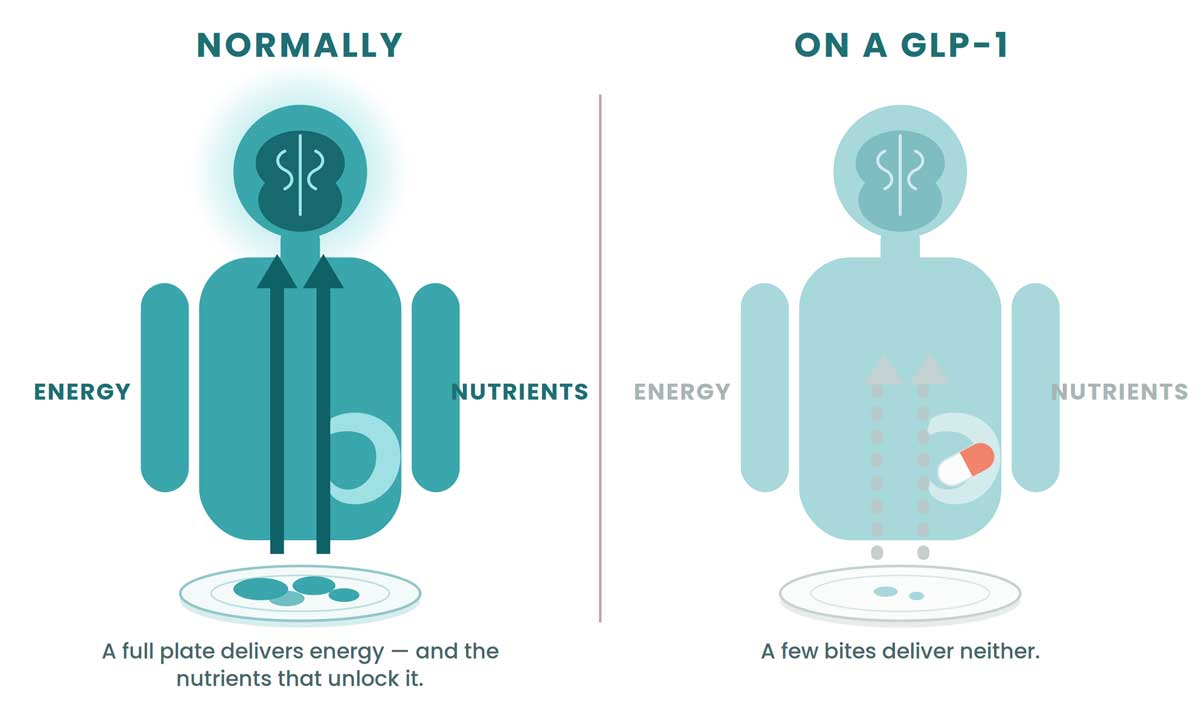
Food is where your energy comes from, and food is also where your vitamins and minerals come from. When your eating drops that far, both drop with it. You're short on fuel, and you're short on the very things your body uses to turn fuel into energy — the B vitamins, the iron, the vitamin D."
I told her my bloodwork had all come back in range. Iron fine, B12 fine, D fine.
"Bloodwork tells you what's in your reserves," she said. "It doesn't tell you what went in this week. You've got stores your body built up over years and for four months you've been drawing them down instead of topping them up.
You feel that long before any lab flags it. There's no blood test that says you've been running on a few hundred calories a day."
So I said the obvious thing. Fine. I'll eat more.
"That's the second problem," she said. "The same medication slowed your stomach down on purpose.
You get four bites in, and you're full, and half the time you're queasy on top of it. So when someone tells you to eat more, they're asking you to do the one thing the drug is set up to stop you from doing.
It's not willpower. Your stomach's in the way."
Then she summed up my last four months in about ten seconds flat.
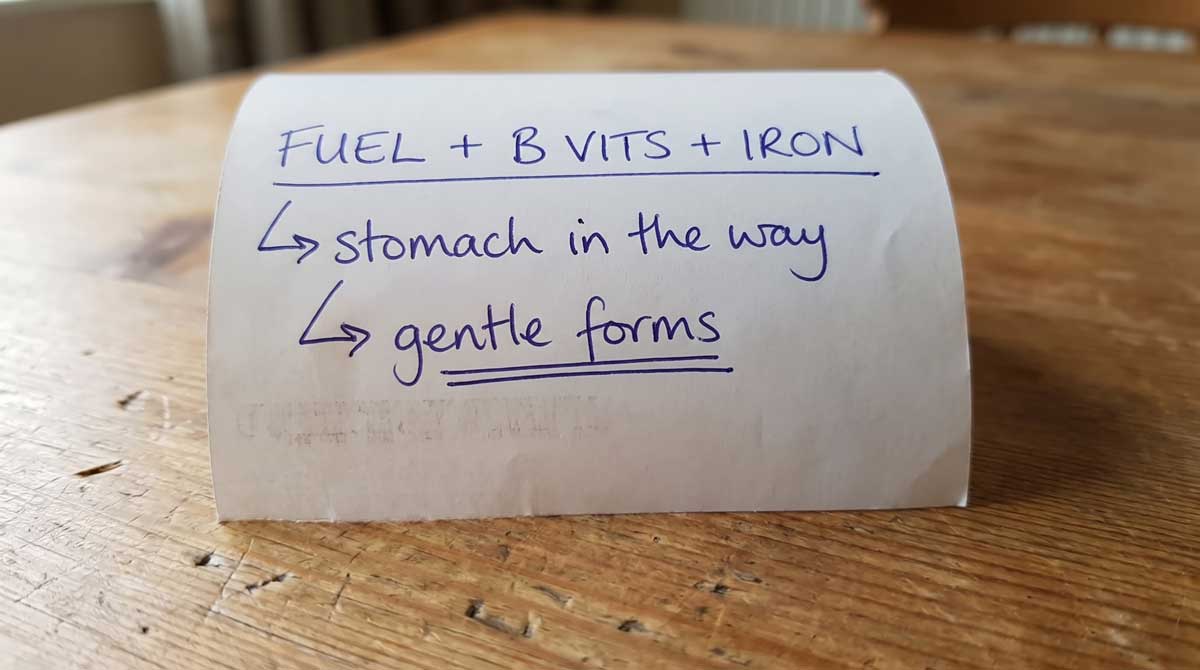
"Two shortages, and a locked door in front of both.
You're low on fuel. You're low on the nutrients that turn fuel into energy. And you can't fix either one by eating your way out, because your stomach won't have it.
That's why the coffee did nothing, the sleep did nothing, and the multivitamin your stomach rejected did nothing."
I'd been scribbling all of it on the back of my receipt as she spoke.
I asked her the last thing, the one that had been bothering me most.
Why does it come on a schedule? Why is it always the day after?
She said that's the pattern for a lot of people. The appetite suppression is at its strongest in the day or two after the shot, so that's when you eat the least.
And running low doesn't show up the same day. It catches up with you the next.
That was the first explanation anyone had given me that fit with what I was living.
Nothing on the shelf was built for this
I went home with that receipt and started looking for what she'd described.
The B vitamins and the iron and the D, in a form a slowed stomach would accept. And something for the queasiness, so I could actually get food in because the food was always going to be the real fix.

And I couldn't find any of it in a form I could handle.
The vitamins came as candy, or as compressed tablets the size of a lozenge that hit an empty stomach like a brick.
The iron on the shelf was the cheap kind, the one that's famous for upsetting stomachs and backing you up, which is the last thing anyone on this medication needs more of.
Everything assumed I was somebody eating three meals a day with a stomach running at normal speed, who could knock back a handful of stuff before work.
None of it was made for a body on this medication. That was the whole problem, and I'd been walking into it for four months without seeing it.
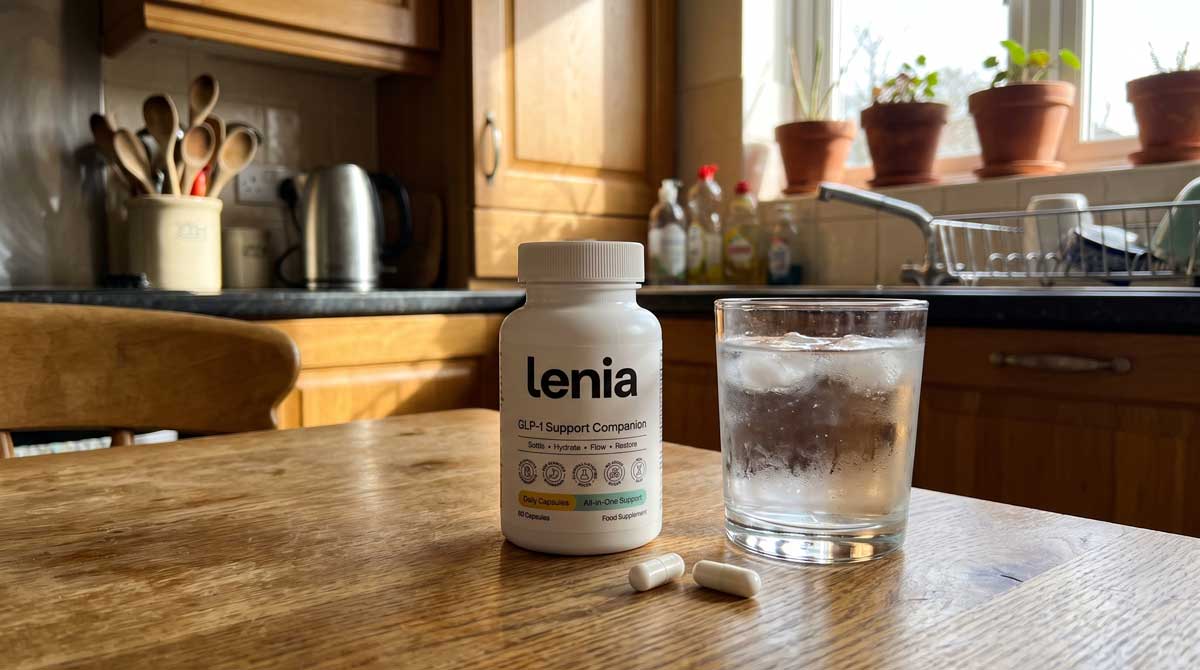
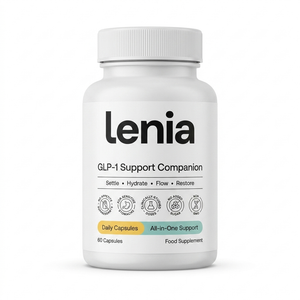
And then I found Lenia, which was the first thing I'd picked up that had been made for someone in my situation.
It's two small capsules, once a day, with water and whatever you manage to eat.
No taste to get past. No 16 ounces of anything to finish. On the mornings when getting anything down is a negotiation, two capsules and a few sips of water is the whole ask.
That's the part I didn't expect to matter, and it's the part that mattered most. Not just what's in it. Whether you can get it down on a bad day.
And it goes after both shortages, plus the stomach standing in front of them:
What it isn't, because I checked before I bought.
It isn't one of those "natural GLP-1" products, and it isn't pretending to stand in for your prescription.
It doesn't touch the weight-loss side at all. Your medication keeps doing that job.
What I didn't see coming is that the eating got easier anyway.
Once the mornings settled and the queasiness eased off, food stopped being a battle, and I started getting proper meals in again.
Lenia covers the minerals and the vitamins. The eating is what filled the tank back up.
I needed the first before I could manage the second.
This is how it went

This is not a "miracle cure." And I'll be totally honest with you – it took a little time to work for me.
Day one, nothing. I took my two capsules with breakfast, went to work, hit the wall at two like always. I nearly wrote it off right there.
By the end of the first week, the afternoons had steadied a little.
Not dramatic. I noticed I'd gotten to four o'clock before I started flagging, which doesn't sound like much unless you've been used to crashing at two.
Week two was when the real change started. The day after my shot was still a low day, but it was a low day instead of a total loss.
I got the groceries done after work. Small thing? Not to me.
By week four, I had a completely normal Thursday. No exhaustion. No crash.
I felt pretty good. And "pretty good" was about 100 times better than what I'd been going through before.
(I'm sure this is different for everyone. Some people might feel better sooner, some later.)
But for me, it took one month to feel like myself again.
Who this is for
If you're on a GLP-1 for weight loss and the tiredness is what's making you wonder how long you can keep this up, this is for you.
It doesn't matter where you are in it.
First month and wondering whether this is normal? Six months in and mostly fine except for two days a week?
And here's the one nobody mentions: every time you step up to a higher dose, the whole thing resets.
The fatigue comes back like it's week one.
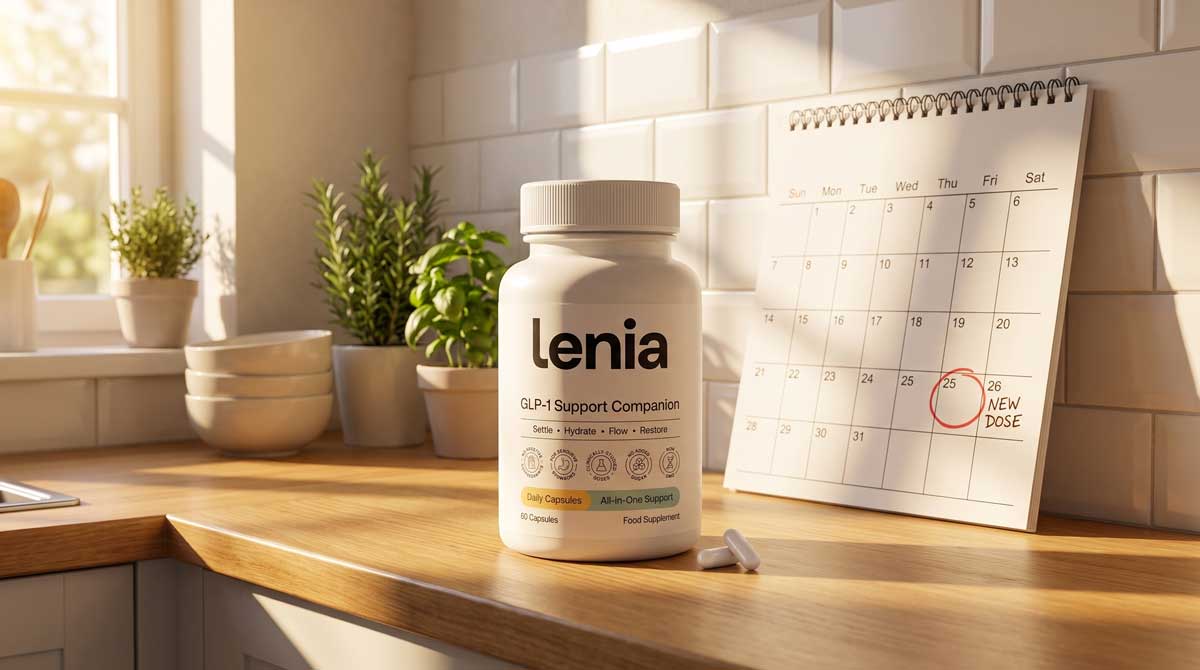
I'd rather have Lenia already on the counter when that happens than be looking for something in the middle of a bad week.
What it costs vs. what it's worth
I'm not going to pretend that Lenia is cheap.
It's a premium formula. And if it did only cost a few dollars, I'm not sure I'd trust it anyway.
But here's the number that puts it in perspective for me.
My shot runs somewhere between $900 and $1,300 a month at list price. It is far and away the most expensive thing in my house.
And roughly half the people who start one aren't still taking it a year later. Side effects are a big part of why.
So the real question isn't whether $39.99 is worth it on its own.
It's whether it's worth it to hold onto the thing that's finally working.
Lenia is $79.99 for a month's bottle. On subscription it's $39.99, half price.
That seems like a small price to pay for getting my afternoons back.

I'm Not The Only One
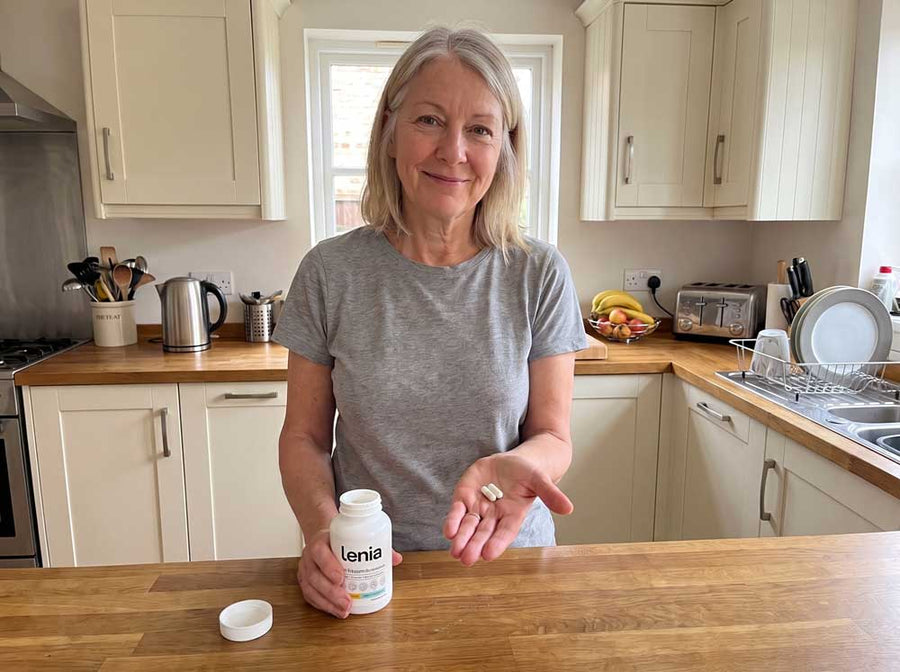
"Iron fine, thyroid fine, B12 fine, and I could barely make it to dinner time. Nobody had once connected it to how little I was actually eating. Six weeks in on this and I feel normal again."
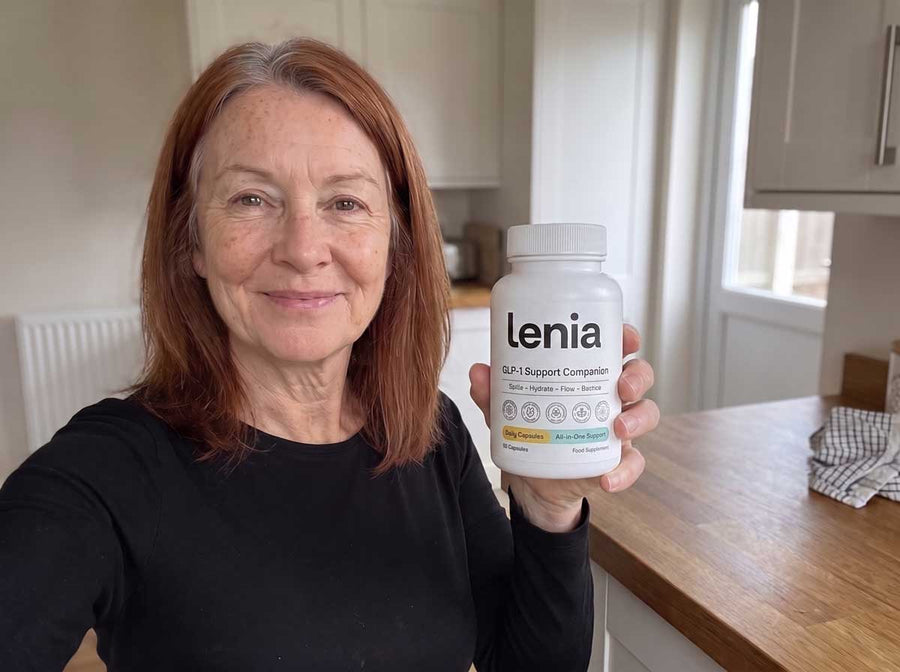
"I used to plan nothing for the day after my injection. Just gave it up. It's not perfect now but it's a slow day rather than a lost one."
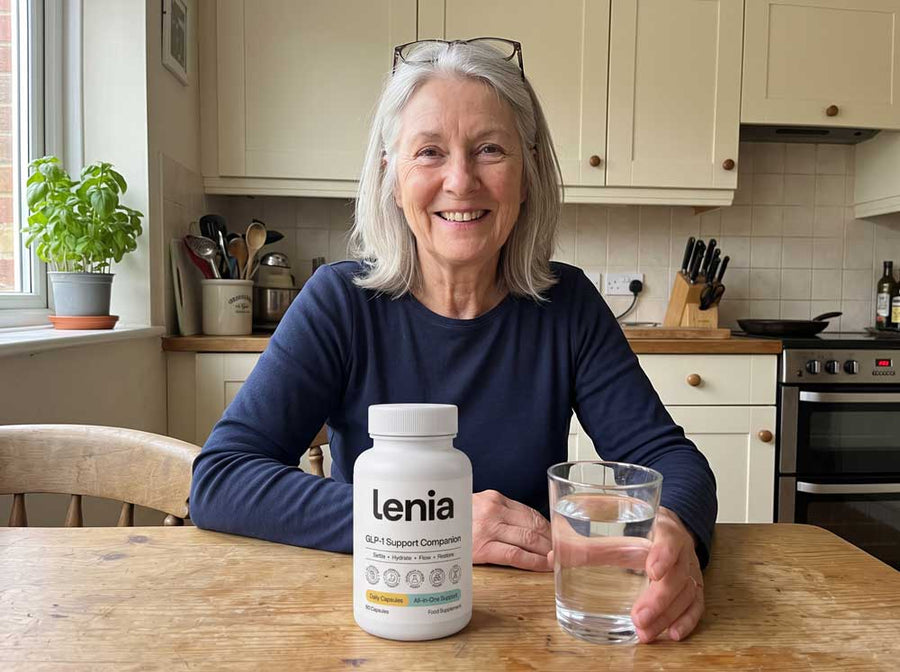
"Caffeine, B12 shots, the fizzy drink tabs,
a multivitamin I couldn't keep down. I was fully expecting this to join the pile. But it works great!"
You Might Be Wondering...
No. I asked my pharmacist before I bought it. Nothing in it changes how your medication works, speeds it up or slows it down. All it does is put back some of the vitamins and minerals you stop getting when you're barely eating. If you want to be sure about your own situation, ask your prescriber or your pharmacist.
A multivitamin is built for someone eating three meals a day with a stomach running at normal speed. That's exactly what I tried, and mine came straight back up in the form of twenty minutes of queasiness.
This is built the other way around: gentle chelated iron instead of the cheap kind that upsets stomachs, B12 in the form your body uses directly, and the ginger, peppermint and enzymes for the queasiness that no multivitamin touches — because on this medication, getting food in is the energy problem.
Because the same medication that's getting you results slowed your stomach down on purpose. Four bites and you're full, and half the time queasy on top. "Eat more" is the one instruction the drug is designed to stop you from following. Settle the stomach first, and the eating follows — that's the order it worked in for me.
For some people it eases after a few weeks on the same dose. Mine hadn't after four months. And every time you move up to a higher dose, it can start again from scratch, which nobody had told me.
I thought so, and that's why I said nothing for four months. But this wasn't ordinary tiredness. It came on the same day every week, like something on a timer.
And I wasn't dieting. I was eating less because a medication had turned my appetite off, which is a different thing entirely.
So had I, and I know what that shelf cost me. The Liquid IV. The B12 gummies. The Fairlife shakes I couldn't finish. The Zofran that handles the worst nausea days but doesn't put anything back.
Every one of those chases one piece of it — the water, or one vitamin, or the sickest moments. None of them was made for a stomach that's been deliberately slowed, and none of them puts back what four months of barely eating takes out. This was built for exactly that. And nothing here replaces what your doctor's given you — it just handles the everyday layer underneath it.
If you're pregnant, nursing, on thyroid medication, or already taking an iron supplement, check with your doctor or pharmacist first — this contains ashwagandha and a full daily dose of iron. And take it with a little food, not on a completely empty stomach.
You email them and get your money back, any time in the first 90 days. That's the only reason I risked it.
The 90-day guarantee, or why I risked it

I'd already wasted hundreds of dollars on things that didn't work. I wasn't ordering on faith.
The deal is this: try it for 90 days. Use it properly, give it the two or three weeks it took me to notice anything.
If you haven't noticed a difference, you email them and get your money back. It really is that simple.
Which changes the question. Trying it isn't the risk. The bottle is refundable.
The only thing you can't get a refund on is another two months of days like the ones you're having now.
So you've got two options
Option one. Close this tab. Keep moving your shot around trying to put the bad days somewhere they'll do less damage. Keep telling yourself this is the price and you're lucky to be paying it.
Keep quietly figuring out how long you can keep this up before you hand back the one thing that's finally shifted the weight.
Option two. Try the one thing made for this problem that covers the vitamins, the minerals, and the queasiness that keeps food out, together, instead of one at a time.
Worst case, you send it back and get your money back.
Best case, it works the way it worked for me. And if it doesn't, you've lost nothing.

Before you give up on something that's helping you, at least find out what's really going on. It isn't the medication doing damage to you.
It's a body running short on food, and on the nutrients that turn food into energy. And you can do something about that.
- Susan Miller
P.S. I've got a dose increase coming up next month. This time last year that would have meant clearing my calendar. I'm not doing that this time.
P.P.S. The thing I'd change is how long I waited. I spent four months assuming this was the deal, and it wasn't. If you're doing the same math I was doing, I hope reading this helps!
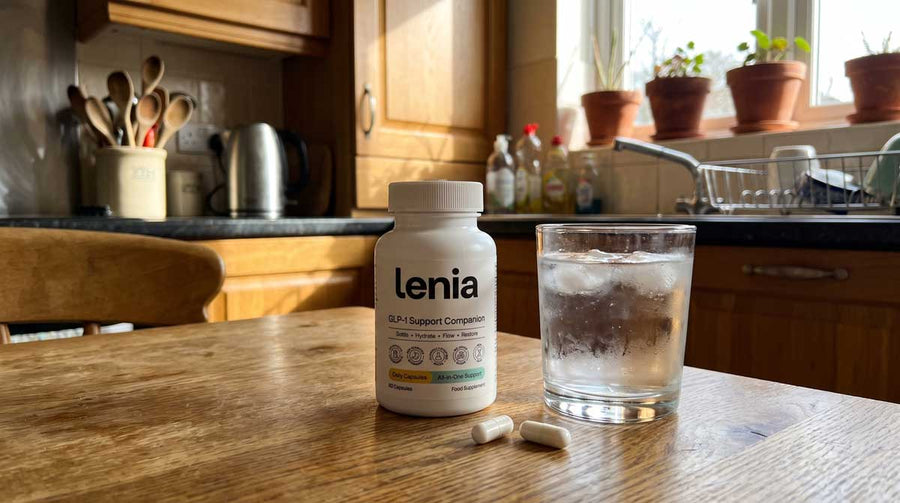












Lenia is a nutritional support product intended to support everyday energy, hydration, digestive comfort and daily nutrients. It is not a GLP-1 medication, a GLP-1 "booster," or a replacement for your prescribed treatment, and it is not intended to diagnose, treat, cure or prevent any disease. Individual experiences vary. Talk to your prescriber or pharmacist about your own routine.
This website is a marketing piece and the owner has a material financial connection to the provider of the goods referred to on the site. The story and testimonials are illustrative; individual results may vary. These statements have not been evaluated by the Food and Drug Administration.