
I Lost 38 Pounds on a GLP-1. Then I Found Out What a Third of It Actually Was.
The jar of pasta sauce beat me on a Tuesday.
I stood in my kitchen, twisting with both hands, and it would not budge.
Eight months earlier, thirty-eight pounds heavier, I could open anything.
I want to be clear about something before I tell you the rest of this story. The medication worked. It is still working.
I am not here to scare anyone off it, and if you take it, I am not here to scare you either.
But nobody warned me about the trade I was quietly making. And when I found out what was actually happening under my skin, I got angry. Not at the drug.
At the silence around it.
The winning streak that felt like losing
On paper, I was a success story.
Down 38 pounds in eight months. Two dress sizes.
My doctor was thrilled. My bloodwork looked better than it had in a decade.
So why did I feel like a deflated version of myself?
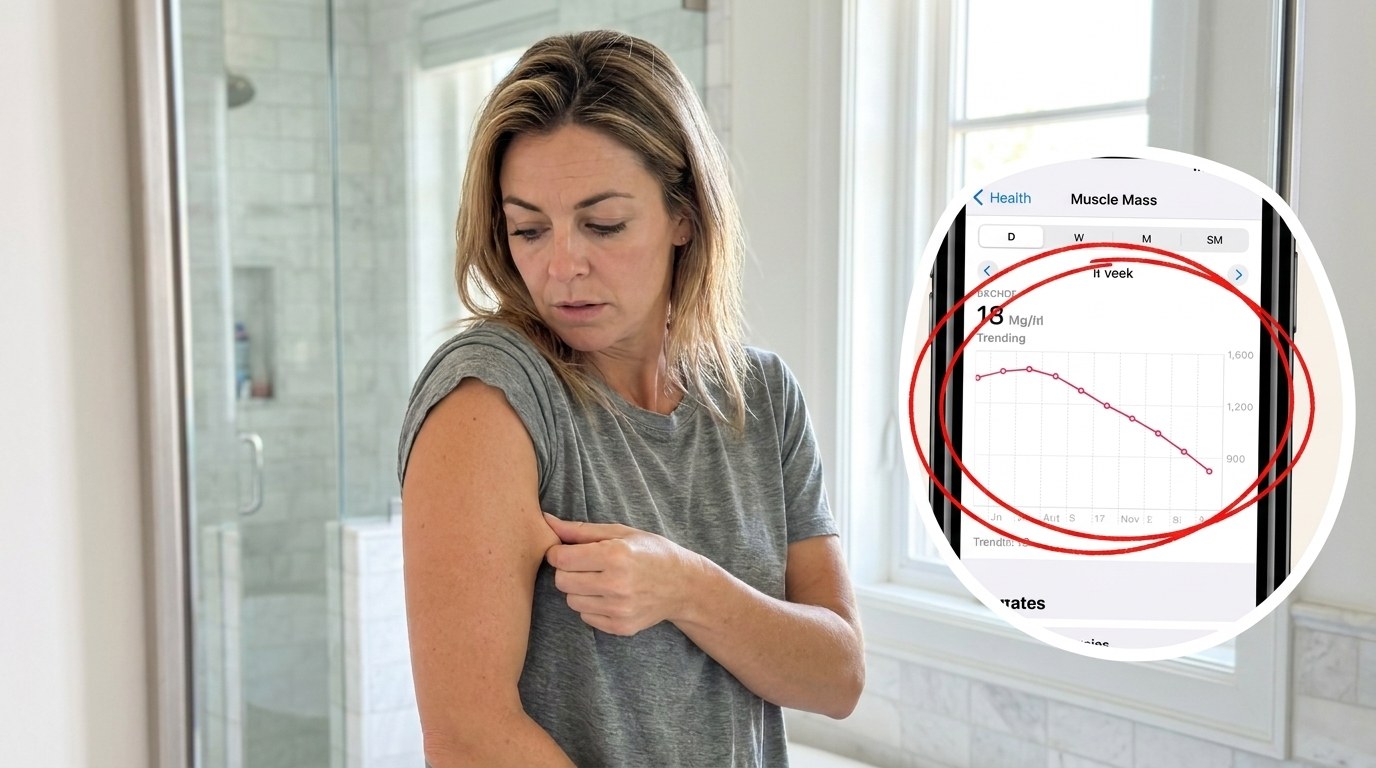
I first noticed it in my arms. The fat was gone, but so was the shape. Everything just… hung there.
A woman in one of my online groups called it “skinny fat,” and I winced, because that was exactly it.
Then it was the stairs at my sister’s place. Winded. Carrying one bag of groceries.
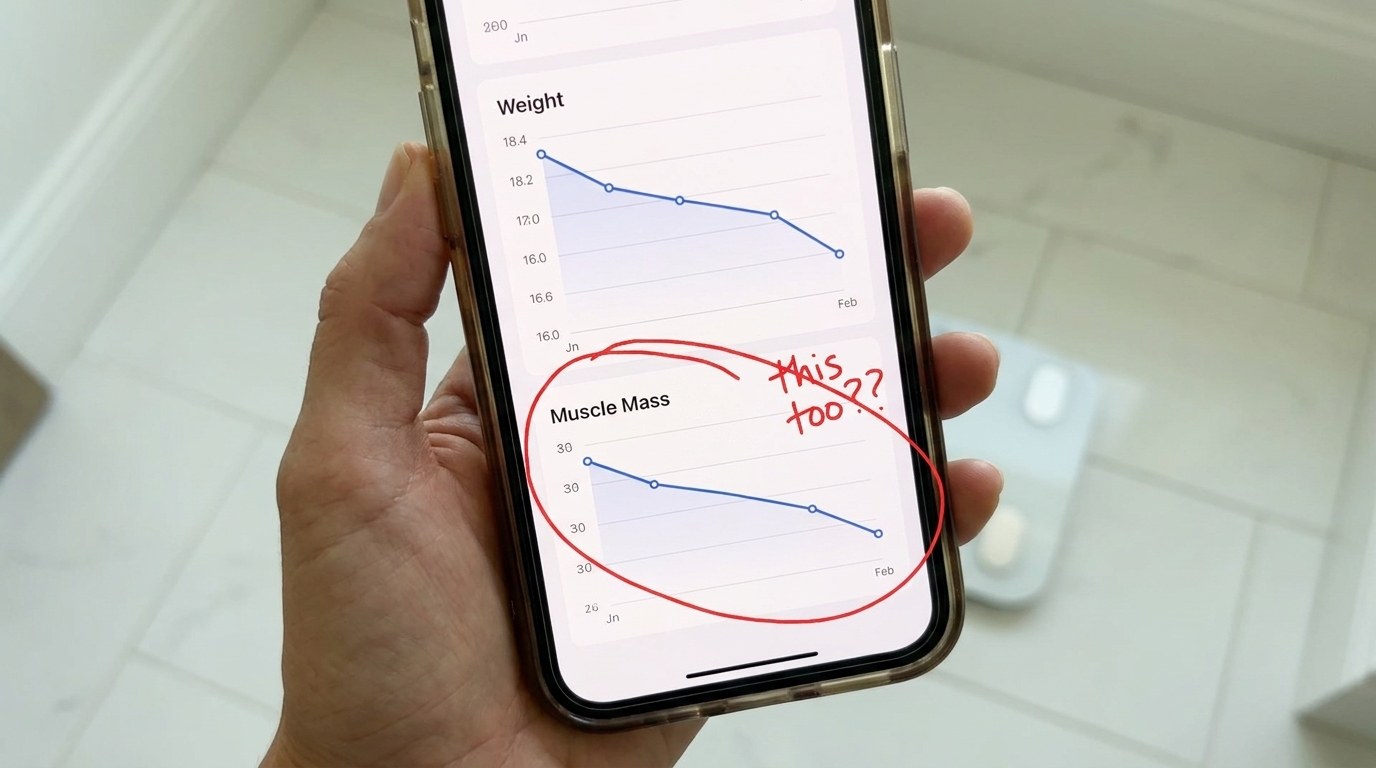
Then it was my smart scale. I had ignored the muscle-mass line for months because the weight line was doing such beautiful things.
When I finally looked, the muscle number had been sliding down almost as steadily as the fat.
I mentioned it at the gym, half joking. My trainer did not laugh. She asked me one question:
“How much protein are you actually eating?”
I honestly had no idea. I was eating maybe half of what I used to eat, total. Some days a few bites of dinner was a victory.
She pulled up something on her phone and showed me.
Depending on which study you read, somewhere between a quarter and 40 percent of the weight people lose on these medications can be lean tissue, not fat, if nothing is done to protect it.
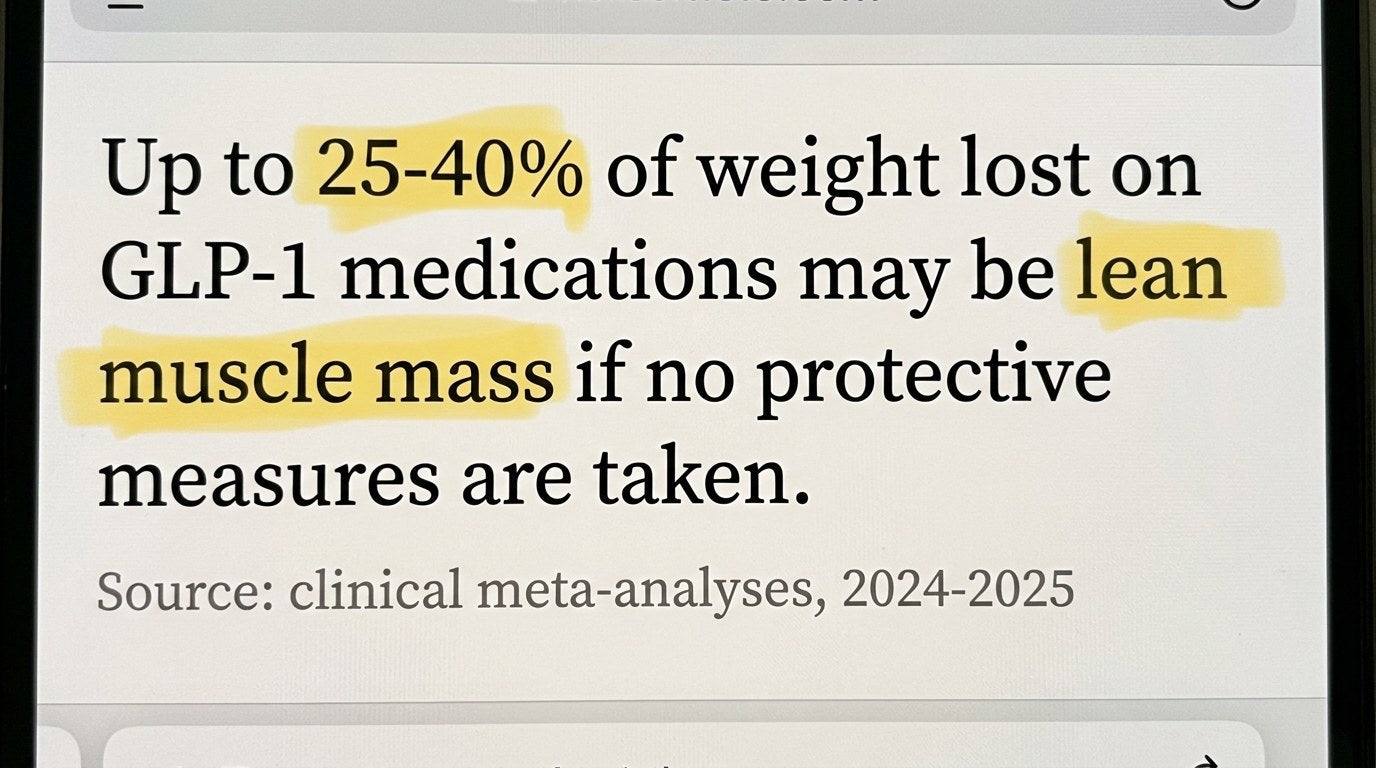
A quarter to 40 percent.
I did the math on my own 38 pounds and felt sick.
What I tried first (and why none of it worked)
If you are on one of these medications, you have probably already heard the standard advice: eat more protein, lift some weights.
Great. Here is what nobody tells you about actually doing that.
Attempt one: protein shakes. I did what everyone in my group does: lined the fridge door with those little Fairlife bottles, then bought the big tub for smoothies.
The problem is that a thick, creamy shake on a GLP-1 stomach sits like wet cement. Nothing wrong with the shakes. They were made for gym people with stomachs running at normal speed, and mine was not.
I would drink half of one and be done eating for four hours, nauseous the whole time. The muscle advice was making the eating problem worse.
Attempt two: forcing real food. I grilled chicken breasts like a meal-prep influencer.
And I learned something strange that other people in my group confirmed: on these medications, meat itself can start to repel you.
I would look at a perfectly nice piece of chicken and my whole body would say no. Some days I physically could not finish six bites.
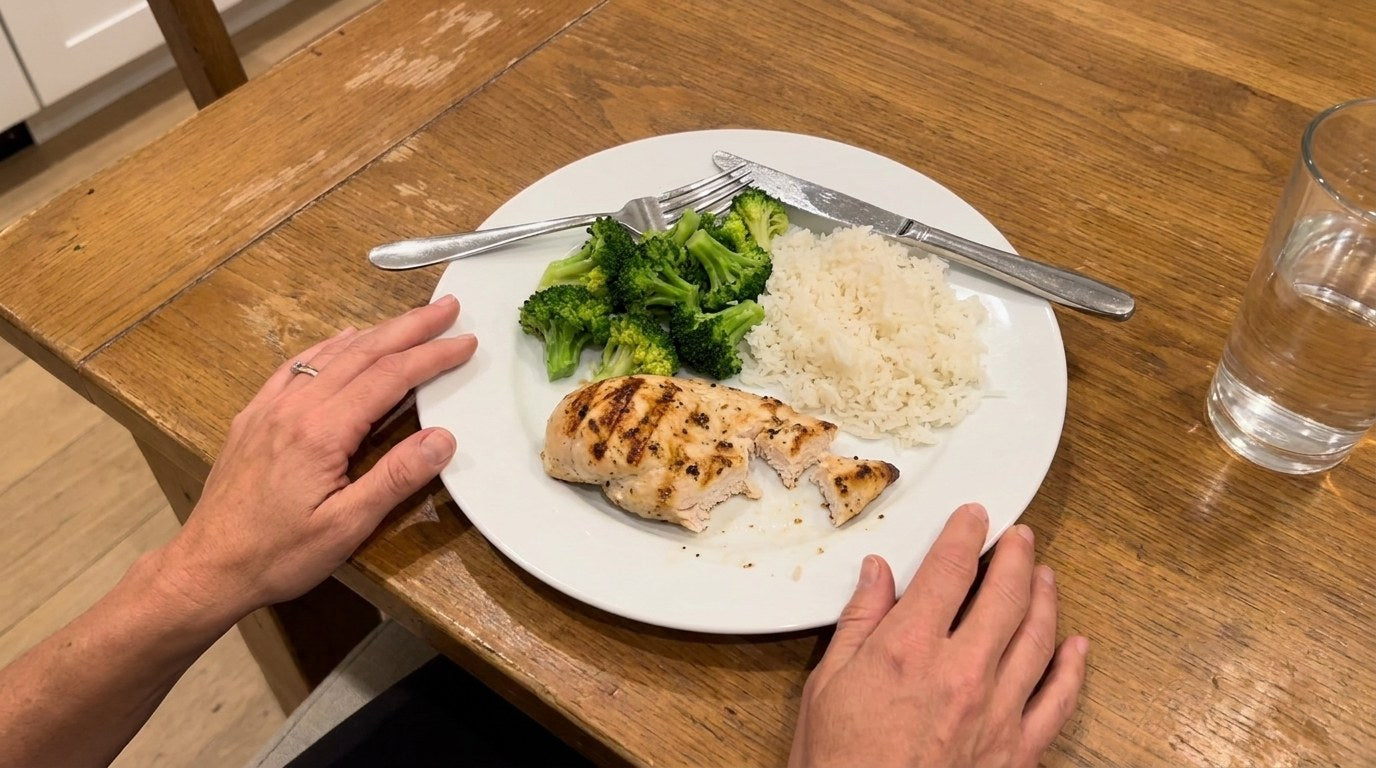
Attempt three: creatine. A friend swore by it. I took it faithfully for two months. My scale numbers kept sliding.
I later learned why, and I will get to that, because it turns out creatine is not the shield the internet makes it out to be.
Attempt four: just lift harder. I tried adding gym days.
But I was running on maybe 900 calories and half the water I should have been drinking, because these medications quietly turn down your thirst too. I was so tired by 3pm that “lift harder” was a fantasy.
My lifts were not going up. They had stalled and started slipping.
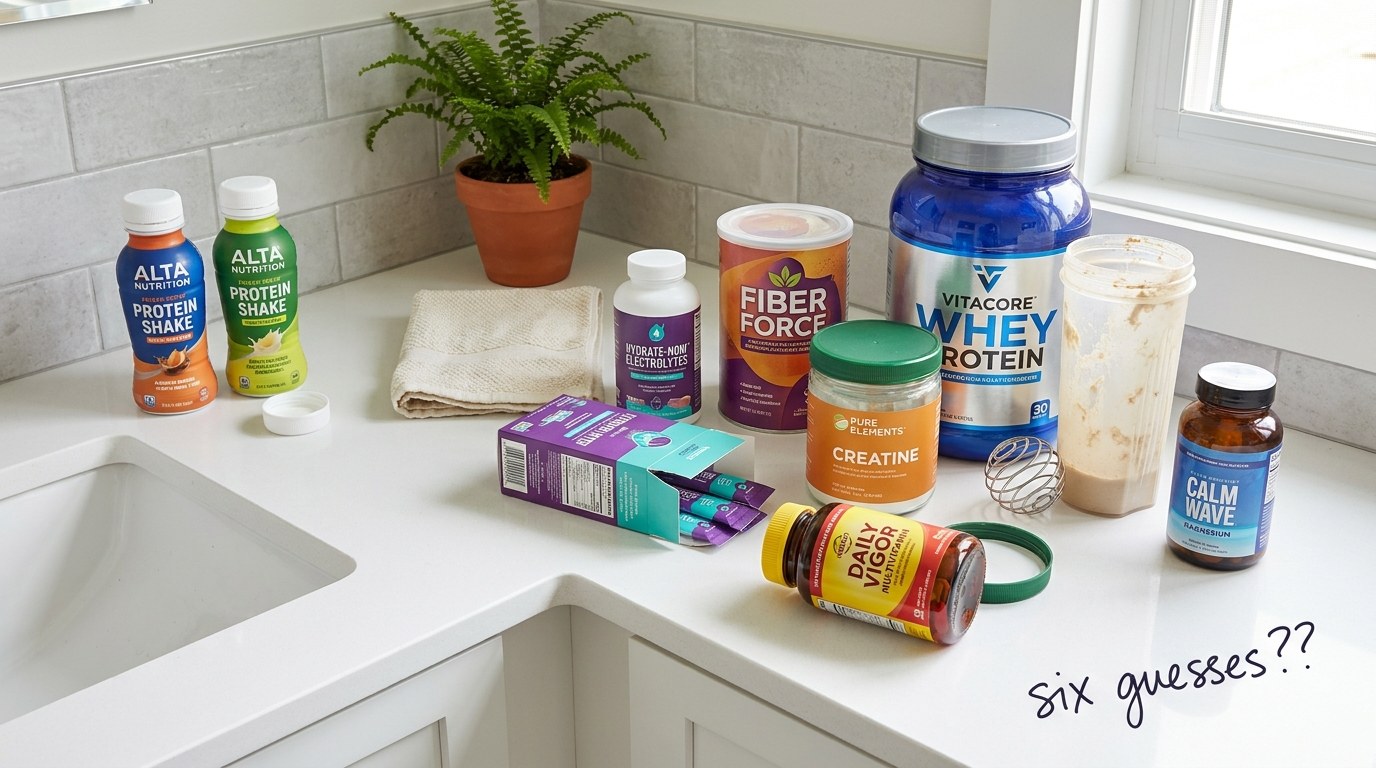
By this point my bathroom counter looked like a pharmacy. The protein bottles and the big tub, creatine, Benefiber, the electrolyte sticks, a multivitamin, magnesium.
Six guesses. Because that is what they were: guesses.
I had no idea if the forms were right, if the doses were right, or if any of it even worked together. I was playing amateur pharmacist with my own body and losing.
I remember standing there one night thinking: I am doing everything right, and I am still getting weaker.
The napkin that changed how I saw all of it
The turning point was not a product. It was a dietitian my doctor sent me to, and a drawing she made on the back of a napkin while my coffee went cold.
I am not a scientist, so I will explain it the way she explained it to me.
She drew a little house.
“Your muscle is this house. And here is the thing almost nobody knows. Your body has no protein pantry. It cannot store protein the way it stores fat.”
“Every single day, it has to find fresh bricks somewhere to do repairs.”
“And if it can’t find them?”
“It pulls bricks out of the walls.”
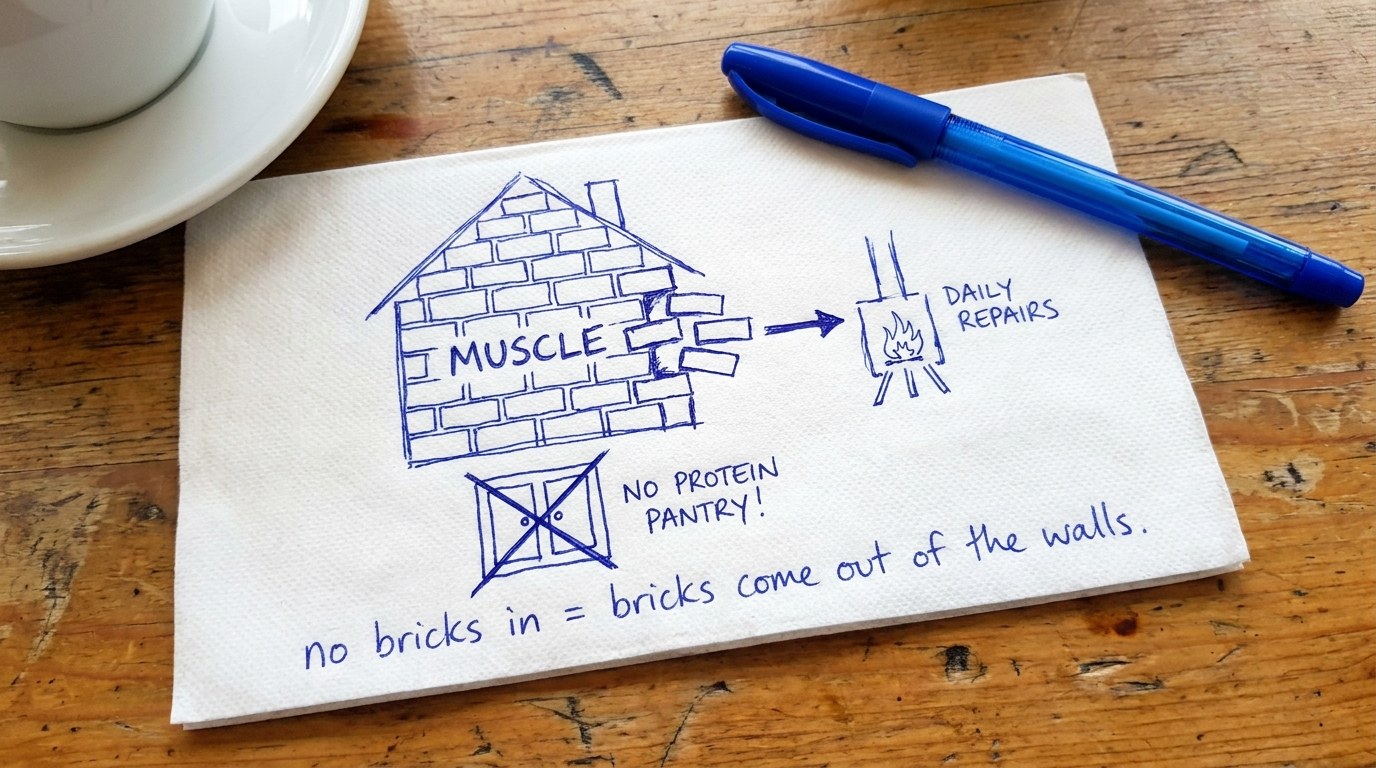
That was the moment my stomach dropped, because I suddenly understood my last eight months. I had cut my eating roughly in half.
My body had been quietly dismantling its own walls, day after day, to keep the lights on.
Not because the medication was toxic. Because the bricks stopped arriving.
Then she drew a second thing, and this was the part that genuinely fascinated me.
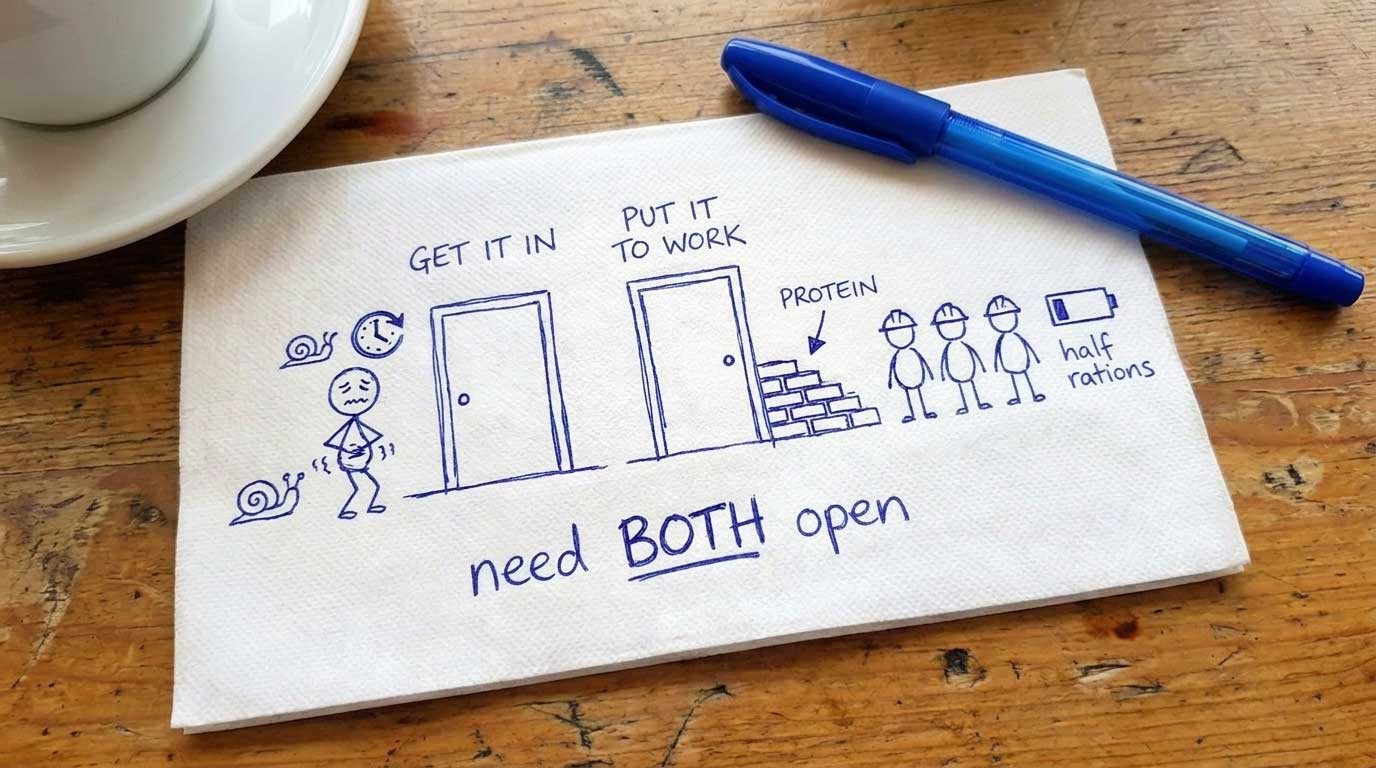
Two doors. Over the first she wrote GET IT IN.
“Here is what nobody explains properly. Your medication slowed your stomach down on purpose. That is not a malfunction, that is the mechanism.”
“But it means everything sits longer, heavy things feel heavier, and protein is the heaviest thing on the plate. So the one thing you need most becomes the one thing you can least face. That is not weakness. That is the design.”
Over the second door she wrote PUT IT TO WORK.
“Bricks do not lay themselves. Turning what you eat into repairs takes a whole crew of helpers, and here is the trap: the crew gets its wages from food too.”
“Months of half rations quietly drains it. So even the protein you fight down gets less done than it should.”
Under both doors she wrote: need BOTH open.
Here is the kicker. More than one in five people on these medications develops a diagnosed nutrient deficiency within a year.
Not because anything is broken. Because everything has been arriving at half volume for months, and nobody told their body to expect it.
So I had been in a double bind without knowing it. Too nauseous to get the bricks in. Too drained to use the bricks I did get.
And creatine? She smiled kindly.
“Creatine is a small multiplier on top of lifting and protein. On its own, it protects almost nothing. You bought a power tool for a job site with no bricks and no crew.”
Everything I had tried failed for the same single reason. I had been fighting ten separate symptoms that were really one problem wearing different masks.
The part where I almost didn’t bother
The dietitian’s plan was simple on paper. Hit a real protein target every day, spread out. Two short strength sessions a week.
And get both doors open: settle the queasiness that was blocking the eating, and refill what months of half rations had quietly drained, starting with the hydration I never felt thirsty for.
My heart sank a little, honestly. That sounded like adding a seventh and eighth bottle to my counter.
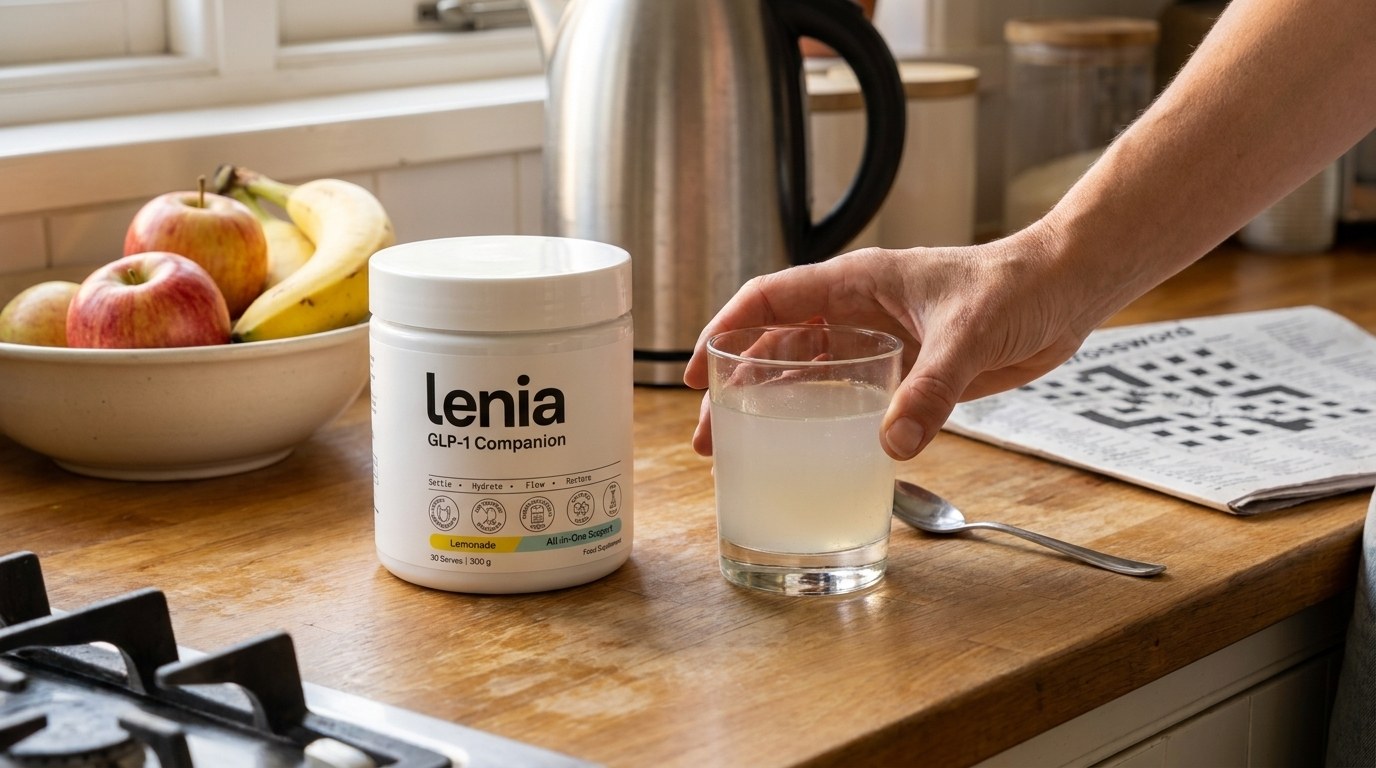
A woman in my group had a different answer. She kept mentioning something called Lenia, a drink made specifically for people on GLP-1 medications.
One scoop in cold water each morning, a light lemonade you can drink straight down or nurse until lunch.
Eight ingredients, and the whole formula is aimed at exactly the two doors on that napkin: the queasiness that stops food going in, and the quiet depletion that decides what your body can do with it.
But it was one thing she said that actually rewired me.
“Amber, every product on your counter was built for a stomach running at normal speed. Gym people. Runners. Stomach bugs.”
“Yours is not running at normal speed anymore. The medication slowed it down on purpose. That is literally how it works. This is the first thing I have found that was made for the stomach we actually have.”
I will be honest about my first reaction: I rolled my eyes.
Every bottle on my counter had also promised it was “for” me. For recovery. For hydration. For gut health.
Being “for” somebody is the cheapest thing you can print on a label, and I had a counter full of proof. I put off ordering it for two weeks.
What finally got me was reading how they explained themselves. Lenia is not a protein powder, and they say so themselves, right on their page.
Their whole idea is different: they work on the doors. The queasiness that stops the protein going in. And the drained, half-rationed body that decides whether it gets used.
The bricks still have to come from food. Lenia’s job is the doors.
That was the first explanation in eight months that matched what the napkin said. So I tried it. Mostly, if I am honest, because of the 90-day money-back guarantee. I fully expected to use it.
What actually happened
I am going to give you the honest timeline, not the fairy tale.
The first few days, the change was smaller and simpler than I expected: mornings stopped starting with that low-grade seasick feeling. The dehydration headaches I did not even realize were dehydration headaches eased off.
And I learned the format is half the trick. I do not knock it back.
I mix it in the morning and sip it until lunch, because “light” is the only thing my stomach agrees to before noon, and you cannot sip a pill.
Around week one, things got moving again, if you know what I mean. I had been quietly miserable on that front for months.
Every fiber product I had tried just inflated me like a balloon. This one did not.
Honestly, around week two I almost stopped. The scale was not doing anything dramatic and I wondered if I was imagining the rest.
What kept me going was one dumb, wonderful detail: I finished a chicken breast. The whole thing. Without the wave of no.
When the nausea backs off, eating protein stops being a battle, and eating protein was the entire point.
By week four and five, the afternoon crash flattened out. My energy stopped feeling like a coin flip. Dose days got noticeably less disruptive.
And because I was not exhausted, those two short strength sessions a week actually started happening.
Four months in, I asked for a follow-up body scan, because I needed to know.
The fat number was still falling. The lean number had essentially stopped falling.
It had held roughly flat since I started hitting my protein and doing the two weekly sessions.
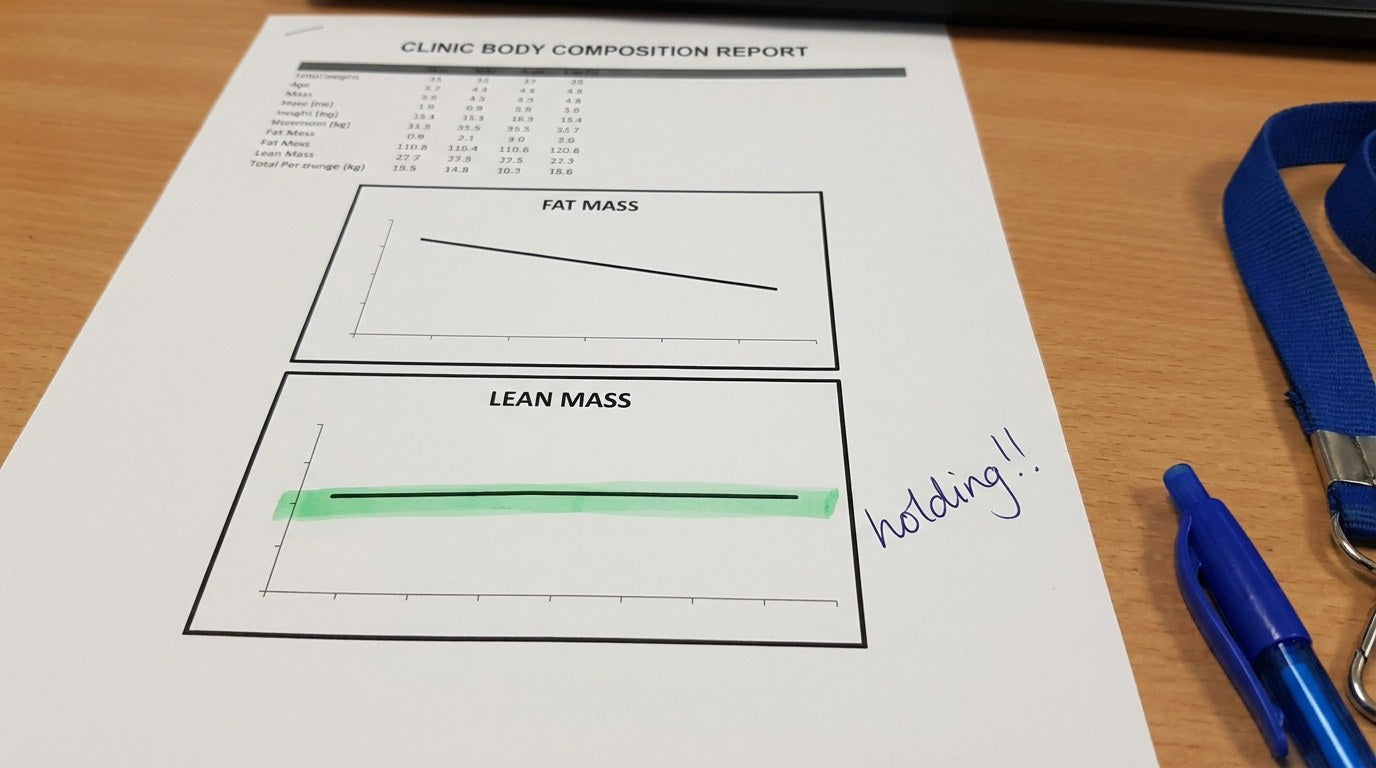
I cried a little in the parking lot. Not because of a supplement. Because for the first time since starting this journey, I was only losing the thing I wanted to lose.
I want to be careful here, because I hate overpromising almost as much as I hate nausea.
Lenia did not “save my muscle.” Protein and two lifting sessions a week are what protect muscle, and every credible expert says the same.
What Lenia did was make that plan physically possible for a person who could not stomach the plan before. That distinction matters, and it is exactly the distinction the fancy tubs on my counter never made.
What a pharmacist knew that I didn’t
I know some of you are like I was. You research before you trust.
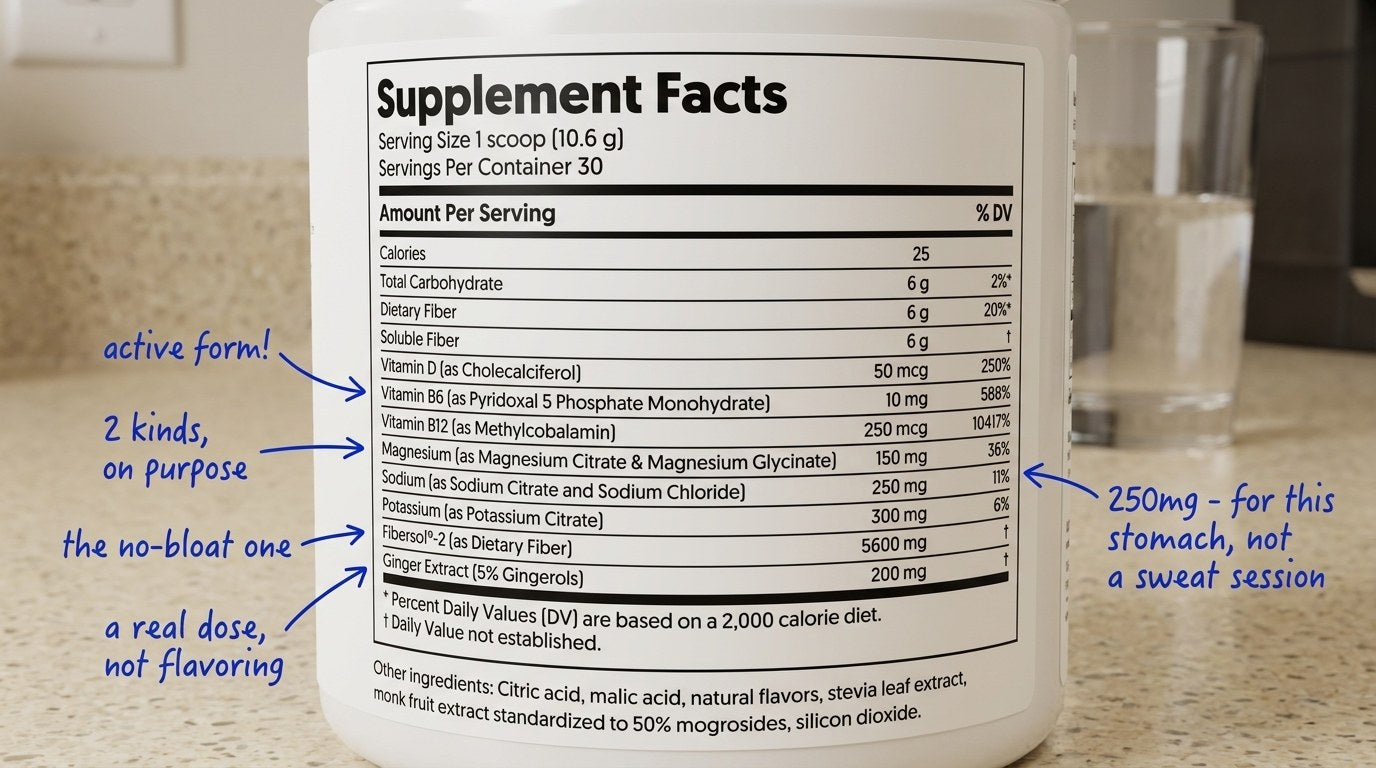
So let me tell you what I found when I actually read the label, because this is where I stopped thinking of it as “another supplement” and started understanding what a pharmacist had actually done here.
Remember the crew from the napkin, the helpers that turn what you eat into repairs? The label is where I finally met them by name.
It is eight ingredients. But it is not the eight ingredients. It is the eight forms and the eight doses, chosen for a stomach that has been deliberately slowed down.
That is the thing none of my counter guesses understood, because every one of them was formulated for a body running at normal speed.
The B6 is the active form, called P5P.
Here is the fascinating bit my dietitian confirmed: regular B6 has to be converted by your body before it can do anything. The active form skips the queue. It arrives ready to work.
This is the foreman from the napkin, already wearing the hard hat.
The magnesium is two kinds at once, citrate and glycinate. On purpose.
One helps keep things moving. The other absorbs gently without upsetting a GLP-1 stomach. I had been taking one random kind for months, wondering why it did half the job.
The sodium is 250mg, dosed for someone eating and drinking less.
The athlete powders I had been choking down run 500 to 1,000mg, because they are built for people sweating buckets, which is why they tasted like salt bombs to me. This is the opposite problem.
The other five follow the same logic: real forms, real doses, chosen for a body getting half its usual supplies.
It is all on the label, every dose clinically studied, pharmacist formulated, made in a cGMP certified facility, 25 calories, no added sugar.
And that last part matters more than it sounds when your appetite is a scarce resource.
Nobody had ever formulated for us before. That is the whole thing.
The shelf is full of products for runners, lifters, hangovers and stomach bugs, all of them assuming a gut moving at normal speed.
Mine is not, by design, and a pharmacist finally built for that.
Now the money part, and I will give you the frame that settled it for me.
The medication itself runs roughly $900 to $1,300 a month at list price. I am lucky enough to pay a copay, but women in my group are close to full price.
And roughly half the people who start one of these medications are not on it a year later, often because the day-to-day gets too hard.
Lenia is $39.99 a month on subscription, 50% off the first order with free shipping, plus a 90-day money-back guarantee I fully planned to use.
It is still sitting there, unused. Apparently fewer than 1% of customers ever use it, which tracks with what I have seen in my group.
Forty dollars to look after the most expensive thing I pay for every month. That math took me about four seconds.
Three questions I had before ordering
It does not replace protein, and they are honest about that to the point of bluntness. The bricks are still your job.
What it does is make the protein you eat easier to get in and easier to digest: it settles the queasiness and heaviness that made protein the single hardest thing for me to eat, so the protein I do eat counts.
If a product had promised more than that, I would not have believed it anyway.
So had I, and your cupboard probably looks like mine did. Zofran for the worst days. Miralax when everything stopped. Tums. Benefiber. Liquid I.V. The Fairlife bottles lined up in the fridge door.
None of it was a scam, and the prescription stuff genuinely has its place; Zofran and Miralax are rescue tools, and I am glad they exist.
But every one of those was chasing one leg of a three-legged problem, and every one was designed for a body running at normal speed. Nothing on that shelf was made for this stomach. This was.
Other way around. It was formulated around the medication. Nothing in it touches how the drug works; it handles what the drug does to your days.
Who this is actually for
If you are on a GLP-1 medication, or about to start one, and any of this sounded like your own diary, you are the person this was built for.
You have noticed the word “deflated” applies to you now. You are weaker on stairs than someone your size should be.
Your lifts have stalled even though your routine has not changed. Your smart scale’s muscle line is quietly sliding.
Or maybe it is simpler than that. You physically cannot face another thick shake or another forced chicken breast.
You are tired in a way coffee does not touch. You worked hard for a strong body and you refuse to trade it away pound for pound with the fat.
The weight loss is the medication’s job. Protecting the rest of you is yours.
The bricks are your job. The doors were the problem, and now you know why both kept swinging shut.
What other people on these medications say
More than 10,000 people on these medications drink Lenia daily, and it has a 4.7 star average across almost 200 verified reviews.
“Week two on my medication was so brutal I was ready to quit. Lenia genuinely turned it around. I only wish I had started sooner.”
“Seven months in and I honestly do not know how I would have handled the side effects without it.”
I would just add one thing to that: do not wait for the jar of pasta sauce.
90-day money-back guarantee. Free shipping on subscriptions. Cancel anytime.
This is one reader’s experience; individual results vary. Lenia is a dietary supplement and is not intended to diagnose, treat, cure or prevent any disease. It is not a GLP-1 medication, a GLP-1 “booster,” or a replacement for your prescribed treatment. Muscle maintenance depends on adequate protein intake and resistance exercise. Always talk to your prescriber before adding any supplement to your routine.
This website is a marketing piece and the owner has a material financial connection to the provider of the goods referred to on the site. The story and testimonials are illustrative; individual results may vary. These statements have not been evaluated by the Food and Drug Administration.